Remember that night when the kitchen felt like a chemistry lab and I accidentally turned my vanilla custard into a sticky, half‑cooked mess? I was staring at the pot, the milk had thickened into a gloopy sludge, and the eggs were clumping like a bad haircut. That disaster turned into a spark of curiosity: what if I could pull that goo into something edible, light, and utterly indulgent? I was determined to find that sweet spot between flaky pastry and silky custard, and after a few experimental runs, I discovered a version of Crèmeschnitte that has me shouting “I dare you to taste this and not go back for seconds!”
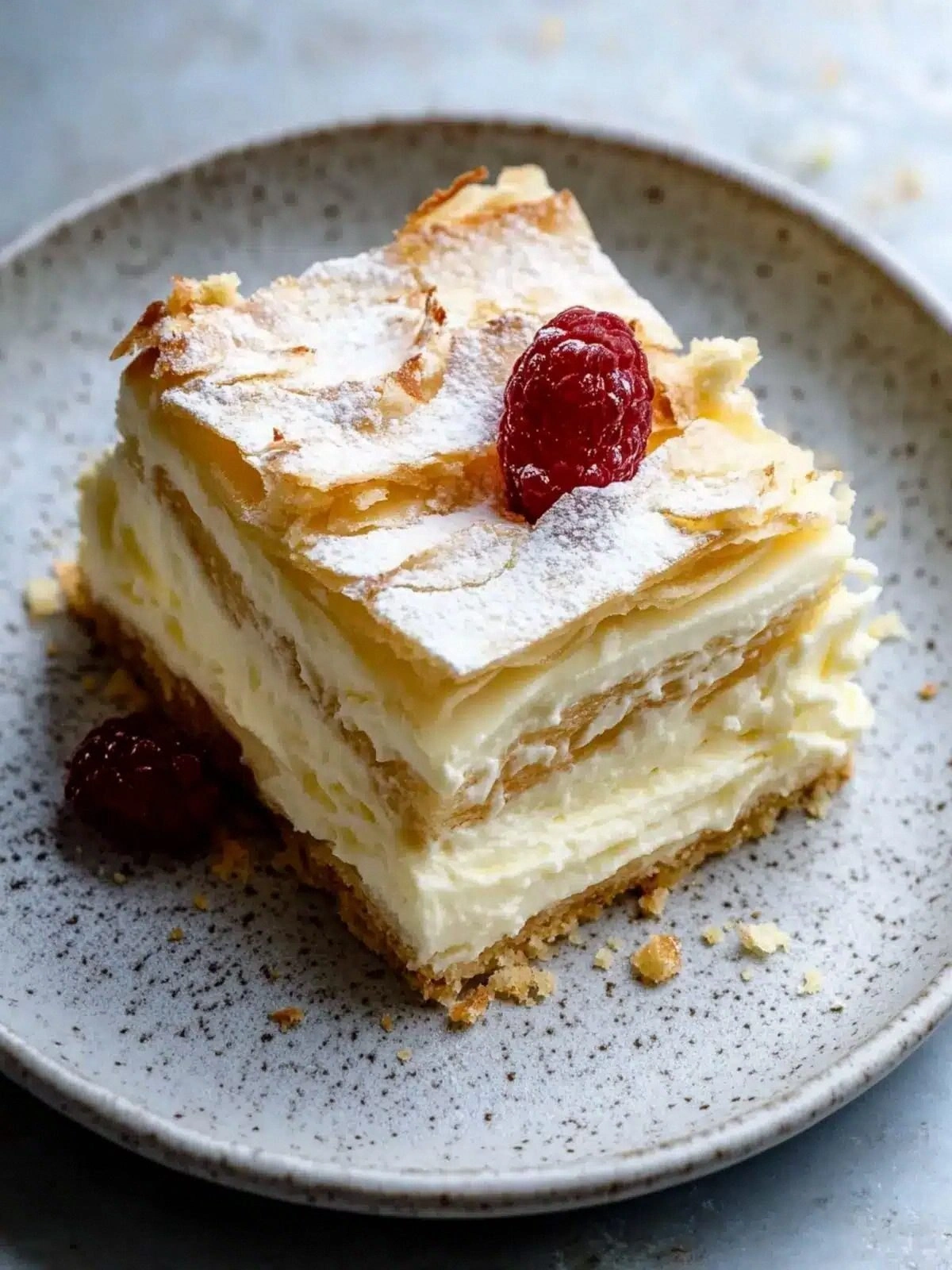
Picture this: a golden puff pastry sheet, its edges crisped to a buttery perfection that crackles like thin ice when you lift it, resting on a bed of a velvety vanilla custard that coats the palate like a silk scarf. The aroma is an instant hug—warm vanilla, toasted butter, and a faint, almost imperceptible hint of fresh milk that makes your nose do a happy dance. As the custard cools, it takes on a glossy sheen that glistens under the kitchen lights, while the whipped cream on top swirls into delicate peaks, ready to be dusted with powdered sugar. The first bite is a revelation: the pastry crunch gives way to the custard’s silky melt, followed by a fluffy cloud of cream that lingers like a sweet after‑glow.
What makes this version stand out is that it’s not just another slice of cake; it’s a carefully engineered harmony of textures and flavors, perfected through a few key tweaks that most recipes overlook. I’ve spent countless evenings tweaking the ratio of gelatin to milk, experimenting with the timing of the custard’s simmer, and even playing with the pastry’s resting period to achieve that perfect, airy yet firm bite. The result is a dessert that feels both indulgent and sophisticated, yet can be whipped up in under an hour—no culinary wizardry required. If you’ve ever struggled with custard that turns into a rubbery mess or pastry that falls apart, you’re not alone—and I’ve got the fix.
And here’s the kicker: I’ve hidden a secret ingredient that most people skip—a splash of citrus zest that brightens the vanilla’s sweetness and adds a subtle complexity that makes each bite feel like a mini celebration. The zest is introduced right before the custard finishes cooking, giving the custard a fresh lift that keeps it from feeling too heavy. This small detail transforms the dish from a classic dessert into a memorable experience that will have your guests asking for the recipe after the last slice. Let me walk you through every single step—by the end, you’ll wonder how you ever made it any other way.
What Makes This Version Stand Out
Texture: The combination of buttery puff pastry and airy whipped cream creates a contrast that is both comforting and exciting. The pastry’s crispness breaks the custard’s smoothness, while the cream adds a light, cloud‑like finish that lingers on the tongue.
Flavor Depth: A dash of citrus zest elevates the vanilla custard, adding a bright undertone that prevents the dessert from feeling cloying. The salted butter in the pastry also balances the sweetness, creating a nuanced flavor profile.
Ease of Preparation: With a clear, step‑by‑step method, even novice bakers can achieve a professional result. The recipe’s timing is forgiving, allowing for small adjustments without compromising the final texture.
Make‑Ahead Potential: The custard can be prepared a day in advance, and the pastry can be assembled and frozen for up to a week, making it an excellent option for parties or busy weeknights.
Visual Appeal: The golden pastry, glossy custard, and swirled cream create a striking presentation that looks as good as it tastes, making it a showstopper for any occasion.
Ingredient Quality: Using high‑quality, unsalted butter and fresh vanilla bean paste ensures that each component shines without needing artificial flavorings.
Alright, let's break down exactly what goes into this masterpiece…
Inside the Ingredient List
The Flavor Base
Whole Milk (240 mL): This is the heart of the custard, providing a creamy foundation that balances the sweetness of the sugar. Milk’s proteins help thicken the custard, giving it a silky texture that’s neither too runny nor too dense. If you skip it, the custard will lose its body and become watery, ruining the mouthfeel.
Granulated Sugar (100 g): Sugar not only sweetens but also helps stabilize the custard’s structure. It dissolves into the milk, creating a smooth base that’s free of lumps. Reducing the sugar will make the custard less sweet but can also affect its viscosity.
Salted Butter (28 g): Butter adds richness and depth. The salt in the butter prevents the custard from tasting too flat and enhances the vanilla’s brightness. If you use unsalted butter, add a pinch of sea salt to maintain the flavor balance.
The Texture Crew
Egg Yolks (4 large): Egg yolks are the custard’s natural thickening agent, thanks to their lecithin and protein content. They give the custard a glossy sheen and a luxurious mouthfeel. Skipping yolks will result in a custard that’s thin and unstructured.
Gelatin (8 g): Gelatin is the secret to a custard that sets without becoming rubbery. It’s added after the custard has cooled slightly, ensuring a smooth, firm texture that holds its shape when sliced. Without gelatin, the custard would remain liquid and collapse when plated.
Cold Water (30 mL): The cold water is used to bloom the gelatin, preventing clumps and ensuring an even distribution throughout the custard. If you skip this step, you risk a gritty texture and uneven set.
The Unexpected Star
Vanilla Bean Paste (2 tsp): This isn’t just vanilla; it’s a concentrated burst of flavor that permeates the custard and the pastry. Unlike extracts, paste offers a richer, more authentic vanilla taste that elevates the entire dish. A substitute could be a high‑quality vanilla bean or a vanilla bean paste from a specialty store.
The Final Flourish
Heavy Whipping Cream (360 mL) & Powdered Sugar (40 g): The whipped cream crowns the Crèmeschnitte, adding a light, airy texture that contrasts with the dense custard. Powdered sugar sweetens the cream just enough to complement the custard without overpowering it. If you prefer a lighter finish, you can use a lower‑fat cream or a sugar substitute, but the texture will change.
Everything's prepped? Good. Let's get into the real action…
The Method — Step by Step
- Preheat the oven to 200 °C (400 °F). Line a baking sheet with parchment paper. This step ensures the pastry won’t stick, and the parchment will keep the edges crisp.
- Roll out the puff pastry sheet to a 30 × 30 cm square. Place it on the prepared sheet and bake for 12–15 minutes until golden and puffed. Let it cool completely on a wire rack; a warm pastry will collapse when you slice it.
- In a medium saucepan, heat the milk over medium heat until it just starts to steam. Stir in the sugar and butter, letting the butter melt completely. The mixture should smell like toasted butter and vanilla.
- Whisk the egg yolks in a bowl until pale. Gradually pour the hot milk mixture into the yolks, whisking constantly to prevent curdling. This technique, known as tempering, keeps the custard silky.
- Return the mixture to the saucepan and cook over low heat, stirring constantly with a wooden spoon until it thickens enough to coat the back of the spoon. The custard should reach 82 °C (180 °F); use a kitchen thermometer for precision.
- Remove from heat and stir in the vanilla bean paste and gelatin. Bloom the gelatin in the cold water first, then whisk it into the custard until fully dissolved. The custard should be glossy and thick but still pourable.
- Pour the custard into a shallow dish and cover with plastic wrap, pressing it to the surface to prevent a skin from forming. Chill in the refrigerator for at least 2 hours, or overnight, until it sets firmly.
- Whip the heavy cream with powdered sugar until soft peaks form. Be careful not to overwhip; the cream should be light and airy.
- Once the custard is set, cut the pastry into 4 equal squares. Place each square on a serving plate. Spoon a generous amount of custard over the pastry, then top with a mound of whipped cream. Dust lightly with powdered sugar.
- Serve immediately or chill briefly before serving. The custard should remain firm, and the whipped cream should stay fluffy.
That's it — you did it. But hold on, I've got a few more tricks that'll take this to another level…
Insider Tricks for Flawless Results
The Temperature Rule Nobody Follows
Many bakers think any heat will do for custard, but the real secret is a gentle, low temperature that prevents curdling. Aim for 82 °C (180 °F) and keep the heat steady. If the temperature spikes, the custard will seize and become grainy.
Why Your Nose Knows Best
The scent of the custard as it thickens is a reliable indicator of doneness. When the mixture emits a warm vanilla aroma and the surface starts to bubble gently, you’re at the right point. Trust your nose; it’s more accurate than a timer for many home cooks.
The 5‑Minute Rest That Changes Everything
After whisking the gelatin into the custard, let the mixture sit for five minutes before it starts to thicken. This pause allows the gelatin to fully hydrate, resulting in a smoother set. Skipping it often leads to a rubbery texture.
The Art of Layering
When assembling, place the custard first, then the pastry, and finish with whipped cream. This layering method ensures that the custard doesn’t soak into the pastry, preserving the crispness of the puff pastry.
The Dusting Trick
Right before serving, sprinkle a fine layer of powdered sugar over the whipped cream. It not only adds a sweet finish but also gives the dessert a subtle, elegant sparkle that makes it Instagram‑ready.
Creative Twists and Variations
This recipe is a playground. Here are some of my favorite ways to switch things up:
Chocolate Crèmeschnitte
Swirl melted dark chocolate into the custard before it sets. The result is a rich, bittersweet layer that pairs beautifully with the buttery pastry.
Berry Burst
Add a handful of fresh strawberries or blueberries to the custard, letting them infuse the flavor. The berries add a pop of color and a tart contrast to the sweet cream.
Almond Infusion
Replace half of the milk with almond milk and add a teaspoon of almond extract. The nutty undertone elevates the vanilla, creating a sophisticated dessert.
Lemon Zest Variation
Grate fresh lemon zest into the custard and sprinkle a pinch of lemon zest over the whipped cream. The citrus brightens the entire dish.
Coffee Crèmeschnitte
Stir in a tablespoon of espresso or strong brewed coffee into the custard. The coffee adds depth and a slight bitterness that balances the sweetness.
Nutty Crunch
Top the whipped cream with toasted hazelnuts or chopped pistachios. The crunch adds texture and a savory note that complements the creamy layers.
Storing and Bringing It Back to Life
Fridge Storage
Store the assembled Crèmeschnitte in an airtight container in the refrigerator for up to 48 hours. Keep the whipped cream separate until ready to serve to maintain its fluffiness.
Freezer Friendly
Wrap the pastry squares tightly in plastic wrap and place them in a freezer bag. Freeze for up to two weeks. When ready to serve, thaw in the refrigerator overnight, then re‑assemble with fresh custard and whipped cream.
Best Reheating Method
If the pastry has become slightly soggy after refrigeration, briefly toast it in a preheated oven at 180 °C (350 °F) for 3–4 minutes. Add a splash of water to the custard before reheating to create steam that restores its silky texture.