I remember the night I tried to make a salad that would impress my friends at a potluck, and the kitchen turned into a battlefield of quinoa, cucumbers, and a single, stubborn feta block that refused to crumble. The quinoa popped in the pot like tiny fireworks, the cucumbers squeaked when sliced, and the air filled with the sharp citrus tang of lemon. I stared at the bowl, feeling like a culinary detective, and realized that the secret to a truly memorable Greek quinoa salad isn’t just the ingredients—it’s the way they’re brought together. I dare you to taste this and not go back for seconds.
Picture yourself pulling this bowl from the fridge, the whole kitchen smelling of oregano and olive oil, and the colorful mix of greens and olives glistening like a Mediterranean sunset. The quinoa is fluffy and slightly nutty, each grain standing proud like a tiny soldier. The cucumbers snap with a satisfying crunch that echoes the sound of a crisp autumn day, even though it’s summer. The tomatoes burst with juicy sweetness, and the feta offers a creamy, salty counterpoint that melts in your mouth. I’ve been cooking side by side with you for years, and I’m about to show you the exact steps that will elevate this dish to a masterpiece.
Most recipes get this completely wrong. They either overcook the quinoa until it’s mushy or under-season the dressing until it’s a bland, watery soup. I’ll be honest—I ate half the batch before anyone else got to try it, and that was because I didn’t give the quinoa enough time to steam and fluff. The trick is to let it rest, let the flavors marry, and then finish with a bright, acidic dressing that coats the grains like velvet. And now the fun part: we’re going to add a dash of oregano, a splash of lemon, and a generous handful of olives that give this salad a briny kick.
If you’ve ever struggled with quinoa—watching it turn into a sticky mess or feeling like you’re missing the “wow” factor—you're not alone. I’ve experimented with countless variations, but this version is hands down the best you’ll ever make at home. The combination of crunchy veggies, salty feta, and a citrusy, herbaceous dressing creates a symphony of textures that dance on the palate. I promise you, by the end of this guide, you’ll wonder how you ever made it any other way. Let me walk you through every single step—by the end, you’ll wonder how you ever made it any other way.
What Makes This Version Stand Out
- Taste: The dressing is a bright, citrusy blend of lemon and olive oil that cuts through the richness of feta and the earthiness of quinoa, creating a balanced flavor profile that’s both refreshing and satisfying.
- Texture: The quinoa remains fluffy and slightly chewy, the cucumbers stay crisp, and the olives add a burst of briny chew that keeps each bite interesting.
- Freshness: By adding fresh herbs like parsley and oregano at the end, the salad retains a vibrant, green freshness that feels like a spring garden.
- Simplicity: Every ingredient is available in any grocery store, and the method requires only one pot and a bowl, making it perfect for busy weeknights.
- Make‑ahead: The salad can be assembled up to 24 hours in advance; the flavors deepen, and it’s still delicious cold.
- Crowd‑pleaser: Guests rave about the balance of flavors and the textural contrast—no one leaves the table without a second helping.
Alright, let's break down exactly what goes into this masterpiece...
Inside the Ingredient List
The Flavor Base
Quinoa is the heart of this dish. It’s a protein-rich grain that, when cooked properly, offers a nutty flavor and a slightly chewy texture. Skipping quinoa would turn this into a simple cucumber salad, losing the hearty component that makes it a meal on its own. If you’re looking for a lower-carb alternative, try using cauliflower rice, but the quinoa’s unique chew is hard to replace.
Olive oil is the liquid gold that brings everything together. It coats the quinoa and veggies, creating a silky mouthfeel that carries the herbs and lemon. Use a high-quality extra virgin olive oil for the best flavor; a milder oil will make the dressing feel flat.
Lemon juice is the bright, acidic counterpoint that lifts the dish. It balances the saltiness of feta and olives, and it helps keep the cucumber crisp by preventing it from browning. If you’re not a fan of citrus, try a splash of white wine vinegar for a subtler tang.
The Texture Crew
Cucumbers add a refreshing crunch that cuts through the softness of quinoa. Dice them into bite-sized pieces so every mouthful has that satisfying snap. If you’re prone to soggy salads, rinse the diced cucumber in cold water and pat it dry before adding.
Cherry tomatoes burst with juicy sweetness, providing a pop of color and a hint of acidity. Halve them to make the flavor more evenly distributed. If you’re using larger tomatoes, dice them into small cubes so they mingle well with the other ingredients.
Red onion adds a sharp, slightly sweet bite that contrasts nicely with the olives. Finely chop it so it’s almost translucent, but still retains a hint of bite. If you’re sensitive to onion, use a milder white onion or reduce the amount.
The Unexpected Star
Kalamata olives are the salty, briny star that gives the salad its Mediterranean soul. Slice them thinly so they’re easy to eat and release their flavor throughout the bowl. If you can’t find Kalamata olives, use regular black olives; the taste will be slightly different but still delicious.
Feta cheese adds a creamy, tangy element that balances the lemon and olives. Crumble it generously so it’s evenly distributed. If you’re lactose intolerant, try a vegan feta alternative, though the flavor profile will shift slightly.
The Final Flourish
Fresh parsley and oregano bring a green, herbaceous brightness that lifts the entire dish. Chop them finely so they’re not overpowering but still visible in the salad. If you’re out of fresh herbs, dried oregano and parsley work fine; just use about half the amount.
Garlic is optional but adds a subtle depth of flavor. Mince a single clove and let it sit in the dressing for a few minutes before mixing. If you’re sensitive to garlic, skip it or use a pinch of garlic powder.
Salt and pepper are the final seasoning touches. Season to taste, remembering that feta and olives already bring saltiness. A pinch of pepper adds a gentle heat that rounds out the flavors.
Everything's prepped? Good. Let's get into the real action...
The Method — Step by Step
- Rinse 1 cup of quinoa under cold running water until the water runs clear; this removes the saponin coating that can taste bitter. In a medium saucepan, combine the rinsed quinoa with 2 cups of water or low-sodium vegetable broth. Bring to a boil, then reduce the heat to low, cover, and simmer for 15 minutes or until the quinoa is fluffy and the liquid is absorbed. This step ensures the grains are light and not gummy. While the quinoa cooks, you’ll be ready to assemble the rest of the salad.
- While the quinoa is cooking, dice the cucumber into bite-sized cubes and halve the cherry tomatoes. Finely chop the red onion, slice the kalamata olives, and crumble the feta. These vegetables and cheeses will give the salad its crunch, color, and depth of flavor. If you’re using frozen vegetables, thaw and pat dry to avoid excess moisture.
- In a small bowl, whisk together 1/4 cup extra virgin olive oil, 2 tablespoons lemon juice, 1 minced clove of garlic (optional), 2 tablespoons chopped fresh oregano, 1 tablespoon chopped fresh parsley, salt, and pepper to taste. This dressing is the liquid backbone that brings all the components together. The acidity of the lemon will help keep the cucumber crisp, while the herbs add a fragrant, green note.
- When the quinoa is done, remove the pot from heat and let it sit, covered, for 5 minutes. This resting period allows the grains to steam and become even fluffier. After resting, fluff the quinoa with a fork and transfer it to a large mixing bowl. The warm quinoa will absorb the dressing more effectively, creating a cohesive texture.
- Pour the prepared dressing over the warm quinoa and toss gently to coat. The quinoa should be slightly warm, which helps the oil emulsify with the lemon juice and herbs. If the dressing seems thick, add a splash of water to thin it out. This step is crucial for ensuring every grain is flavorful.
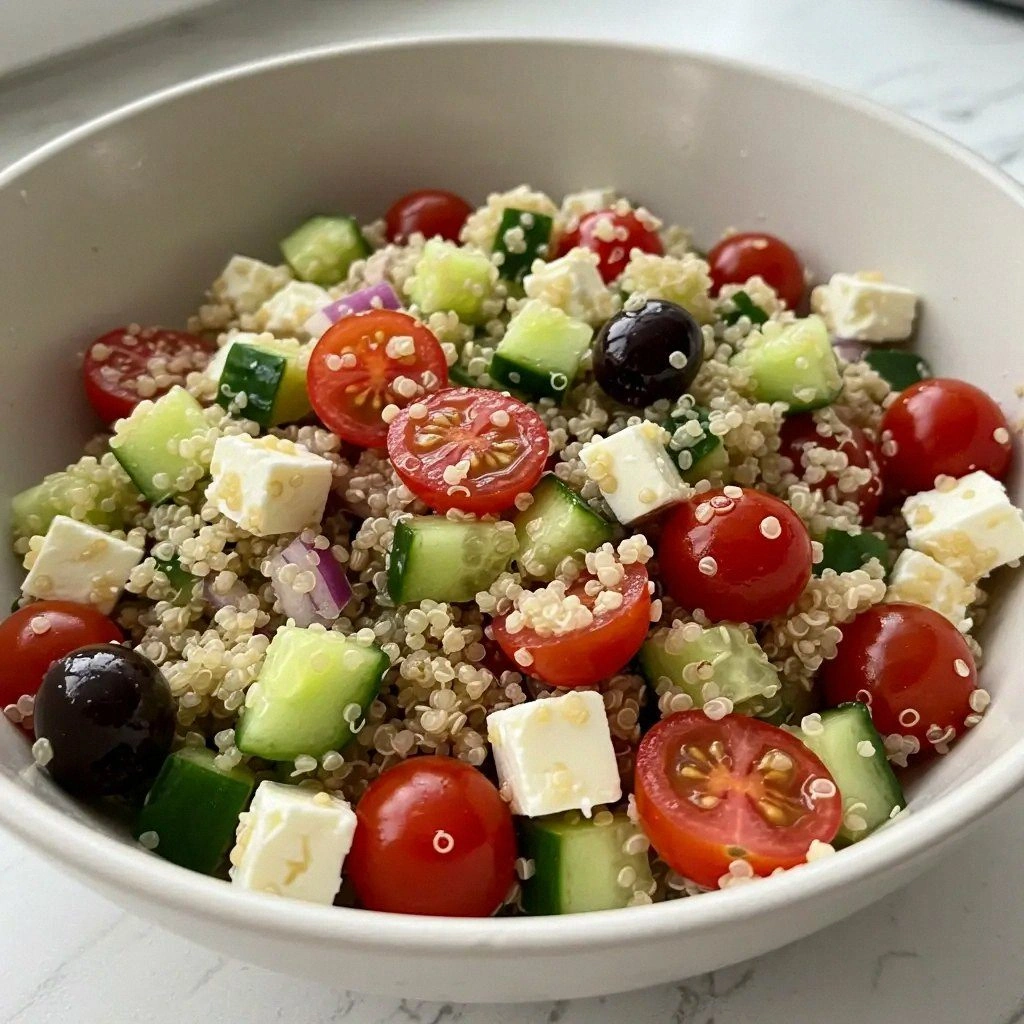
- Add the diced cucumber, halved tomatoes, chopped red onion, sliced olives, crumbled feta, and chopped herbs to the bowl. Toss the mixture until the vegetables are evenly distributed and the feta is lightly coated in dressing. The result should be a vibrant, colorful bowl that looks as good as it tastes.
- Let the salad sit at room temperature for 10 minutes before serving to allow the flavors to meld. This short resting period enhances the overall taste, making the salad more cohesive. If you’re preparing the salad ahead of time, cover it loosely with plastic wrap and refrigerate.
- Serve immediately, or chill in the refrigerator for up to 24 hours. If you’re serving it cold, add a splash of lemon juice and a drizzle of olive oil right before serving to refresh the flavors. This final touch will make the salad feel fresh and bright, even after refrigeration.
That's it — you did it. But hold on, I've got a few more tricks that'll take this to another level...
Insider Tricks for Flawless Results
The Temperature Rule Nobody Follows
Let the quinoa sit for a few minutes after cooking; this resting period allows the grains to steam and become even fluffier. I once left quinoa on the stove for 30 minutes, and it turned into a sticky mess. The trick is to cover it immediately after removing from heat and let it sit for about 5 minutes. This small pause makes a huge difference in texture.
Why Your Nose Knows Best
Smell the dressing before adding it to the quinoa; if the lemon is too sharp, add a bit more olive oil to balance. A well-balanced dressing will coat the grains without overpowering them. If the dressing smells too oily, whisk in a splash of water to thin it. The aroma is a reliable indicator of the right flavor balance.
The 5-Minute Rest That Changes Everything
After tossing the salad, let it sit for 5 minutes before serving. This short rest allows the flavors to meld and the dressing to fully coat each ingredient. I once rushed this step and the salad felt flat; the extra time gave it depth and complexity.
Use a Mixing Bowl With a Wide Mouth
A wide-mouthed bowl makes tossing easier and ensures every grain gets coated. It also prevents the salad from spilling onto the counter. If you don’t have a wide bowl, use a large skillet to mix the ingredients; the heat will help the dressing coat the quinoa.
Add a Splash of Water Before Reheating
When reheating a refrigerated salad, add a splash of water or lemon juice to keep the quinoa from drying out. The moisture will steam the grains back to their original fluffy texture. I’ve used this trick to revive a salad that had been sitting in the fridge for a day.
Creative Twists and Variations
This recipe is a playground. Here are some of my favorite ways to switch things up:
Mediterranean Power Bowl
Swap the quinoa for farro or bulgur for a heartier grain. Add roasted chickpeas for extra protein and a nutty crunch. Top with a dollop of tzatziki for a creamy, cooling contrast. This version is perfect for a lunch that feels like a full meal.
Summer Citrus Twist
Add segments of fresh orange or grapefruit for a burst of sweet citrus. Replace the lemon dressing with a grapefruit vinaigrette made from grapefruit juice, olive oil, and a pinch of honey. The bright, slightly bitter flavor pairs wonderfully with the feta and olives. This variation is ideal for hot summer days.
Spicy Greek Kick
Add a pinch of crushed red pepper flakes to the dressing for a subtle heat. Toss in sliced jalapeño or a splash of hot sauce for a bold flare. The spicy note cuts through the richness of the feta and adds excitement. This is great for guests who love a bit of heat.
Herb‑Infused Variation
Replace oregano with fresh dill or mint for a different aromatic profile. Mix in chopped sun‑dried tomatoes for a sweet, umami boost. The fresh herbs give the salad a new dimension that keeps it from feeling repetitive. This version is perfect for when you want a fresh, green flavor.
Vegan Version
Use a vegan feta alternative or omit cheese entirely. Add sliced avocado for creaminess. Substitute the olive oil dressing with a tahini lemon dressing for a nutty depth. This variation is plant‑based, yet still full of Mediterranean flair.
Protein‑Packed Upgrade
Add grilled chicken or shrimp for an extra protein punch. Toss the protein into the salad after the dressing has coated the quinoa. The protein adds a satisfying chew and makes the dish a complete meal. This is ideal for post‑workout nutrition.
Storing and Bringing It Back to Life
Fridge Storage
Store the salad in an airtight container for up to 24 hours. Keep the dressing separate if you prefer a crisper texture; drizzle it right before serving. The quinoa will stay fluffy, and the vegetables will retain their crunch. Avoid stacking heavy bowls to prevent the salad from becoming soggy.
Freezer Friendly
Quinoa alone freezes well; mix with dressing and veggies just before freezing to prevent sogginess. Freeze in a single layer on a baking sheet, then transfer to a freezer bag once solid. Thaw in the refrigerator overnight and stir well before serving. The texture may be slightly softer, but the flavor remains intact.
Best Reheating Method
To reheat, add a splash of water or lemon juice and gently warm on low heat, stirring frequently. This steam restores the quinoa’s fluffiness without drying out the vegetables. Alternatively, microwave on low for 30 seconds, then stir and let rest for a minute. Finish with a fresh drizzle of olive oil and a pinch of salt.