It started with a kitchen catastrophe that would have left me in the dumps for weeks. I had just opened a bag of fresh clams, and the whole apartment smelled like a seafood market exploded. The clams were a little too wet, the garlic was over‑roasted, and the pasta was under‑cooked. I stared at the pot, feeling the sting of disappointment, and wondered if I’d ever get a dish that could turn that disaster into something edible.
Then a friend texted me a recipe I’d seen on a food blog, promising a “clam sauce that’ll make your taste buds do cartwheels.” I was skeptical, but the aroma of garlic and citrus in the video made my mouth water. I could almost hear the sizzling of oil, feel the heat of the pan, and taste the briny clams bursting with flavor. The moment the sauce hit my tongue, I knew I had stumbled on a culinary revelation.
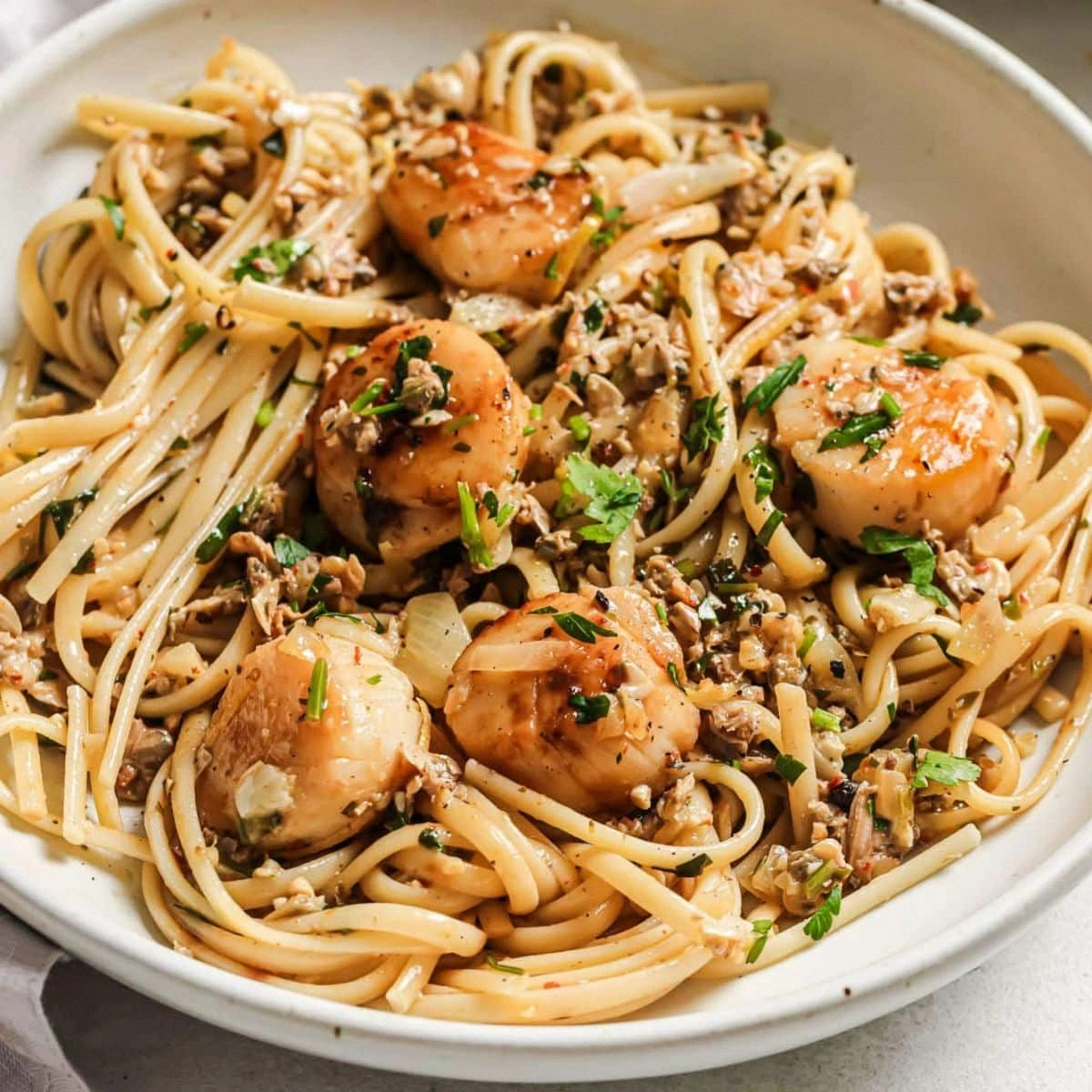
Why does this version stand out from the countless clam‑pasta recipes out there? Because it balances the brine of the clams with a bright lemon‑parsley finish, while the scallops add a buttery, caramelized crunch that feels like a secret layer of decadence. The sauce is silky, yet it clings to the linguine like velvet, and the scallops’ edges crisp just enough to provide a satisfying contrast. It’s a dish that feels both sophisticated and comforting, and it’s easy to make in a single pan.
And there’s a twist you won’t see in most recipes: I use a splash of dry white wine that evaporates quickly, leaving behind a subtle depth that makes the sauce feel like a well‑crafted broth. I dare you to taste this and not go back for seconds. Let me walk you through every single step — by the end, you’ll wonder how you ever made it any other way.
What Makes This Version Stand Out
- Flavor: The clams are cooked in a broth of wine, garlic, and oregano that infuses the pasta with a savory, briny richness that’s hard to beat.
- Texture: The linguine is al dente, offering a firm bite that resists the slickness of the sauce, while the scallops provide a buttery, slightly caramelized edge.
- Balance: The bright lemon and fresh parsley cut through the heaviness of butter and wine, creating a harmonious contrast that lifts the dish.
- Speed: The entire meal comes together in under 45 minutes, making it a go-to for a weekday dinner that feels special.
- Ingredient Quality: Using fresh clams and sea scallops, rather than canned, ensures a superior texture and flavor profile.
- Versatility: The sauce works beautifully with different pasta shapes, making it a flexible base for other seafood or vegetarian variations.
- Presentation: The dish looks like a culinary masterpiece, with glossy sauce, bright green parsley, and a golden sheen from the scallops.
- Make‑Ahead Potential: The sauce can be made ahead and reheated without losing its silky texture, which is perfect for meal prep.
Alright, let's break down exactly what goes into this masterpiece...
Inside the Ingredient List
The Flavor Base
Olive Oil: The first tablespoon of olive oil is the canvas on which all the flavors are built. It helps dissolve the garlic and onion, creating a fragrant foundation. Skipping this step will leave the sauce feeling flat and under‑developed.
Garlic: The five cloves, minced finely, release their essential oils into the oil, creating a sweet, aromatic base. Too much garlic can become bitter, so aim for a balanced, mellow aroma.
Yellow Onion: The quarter cup of diced onion adds subtle sweetness and depth. When sautéed until translucent, it forms a mellow backdrop for the clams’ brininess.
The Texture Crew
Linguine: The 16 ounces of pasta provide the perfect shape to hold the sauce. Because linguine has wide strands, it captures the liquid and clams better than thinner pastas.
Sea Scallops: The pound of scallops adds a luxurious, buttery texture that contrasts with the tender clams. Their quick sear creates a golden crust that feels indulgent.
Butter: The tablespoon of butter for the sauce and the two tablespoons for the scallops give the dish a silky finish and help meld all the flavors together. Butter also adds a subtle caramel note.
The Unexpected Star
Clams: Fresh, chopped clams bring a briny, oceanic flavor that is the heart of the dish. When simmered in wine, they release their juices, creating a natural broth that coats the pasta.
White Wine: The half cup of dry white wine acts as a deglazing agent, lifting all the browned bits from the pan and infusing the sauce with a subtle acidity. It also evaporates quickly, leaving behind a concentrated flavor.
The Final Flourish
Lemon: Squeezing the juice of a whole lemon brightens the sauce and balances the richness of the butter and clams. The zest can be added later for an extra punch of citrus.
Fresh Parsley: The quarter cup of chopped parsley adds a fresh, herbal note and a pop of color that makes the dish feel alive. It also helps cut through the heaviness of the sauce.
Everything's prepped? Good. Let's get into the real action...
The Method — Step by Step
- Bring a large pot of salted water to a rolling boil and cook the linguine until it’s just shy of al dente, about 8–9 minutes. Drain, reserving a cup of pasta water for later. Toss the pasta with a splash of olive oil so it doesn’t stick together. This step ensures the noodles are perfectly tender and ready to soak up the sauce.
- While the pasta cooks, heat the tablespoon of olive oil in a wide skillet over medium heat. Add the minced garlic and diced onion, sautéing until the onion is translucent and the garlic is fragrant—about 3 minutes. The aroma should be warm and inviting, like a cozy kitchen corner. This is the flavor foundation of the dish.
- Stir in the dried oregano and red pepper flakes, letting them toast for 30 seconds to release their essential oils. The mixture should emit a subtle, smoky scent. This step adds depth and a hint of heat that balances the briny clams.
- Pour in the half cup of dry white wine, scraping the bottom of the pan to loosen any browned bits. Let the wine reduce by half, which will concentrate the flavor and create a silky base for the sauce. The reduction should thicken slightly and give off a subtle aroma of toasted herbs.
- Add the chopped clams to the skillet, cover, and simmer for 4–5 minutes until the clams open. Discard any that remain closed. The clams should release their juices, forming a natural broth. This is the trickiest step—if the clams stay closed, they’re not fresh, and the dish will feel dry.
- Whisk the tablespoon of butter into the sauce until it’s fully incorporated, creating a glossy finish. Add the lemon juice, then season with salt and pepper to taste. The sauce should be silky, not oily, and the lemon should brighten the entire dish. This step ensures the sauce coats the pasta like velvet.
- Meanwhile, heat the 1/2 tablespoon of olive oil in a separate pan over medium-high heat. Sear the scallops for 2–3 minutes on each side until they’re golden brown and just cooked through. The scallops should have a caramelized crust but remain tender inside. This step adds a luxurious texture that contrasts with the clams.
- Add the cooked linguine to the skillet with the clam sauce, tossing to coat the pasta evenly. If the sauce seems too thick, add a splash of reserved pasta water to achieve a silky consistency. Finally, fold in the seared scallops and chopped parsley, then plate immediately. The dish should be aromatic, with a bright, citrusy scent and a glossy, buttery finish.
That's it — you did it. But hold on, I've got a few more tricks that'll take this to another level...
Insider Tricks for Flawless Results
The Temperature Rule Nobody Follows
Why it matters: Cooking pasta at a rolling boil and then draining it while still hot ensures the noodles stay firm and absorb the sauce better. Many people let the water cool slightly, which causes the pasta to become mushy. Keep the heat high until the pasta is ready.
Why Your Nose Knows Best
Tip: Smell the sauce after adding the wine. If it has a sharp, sour scent, you’ve added too much wine. If it’s too mild, let it simmer a bit longer to develop depth. Your nose is your best seasoning guide.
The 5-Minute Rest That Changes Everything
Why it matters: After searing the scallops, let them rest for 5 minutes before adding them to the pasta. This allows the juices to redistribute, keeping the scallops moist and tender instead of dry.
Use Fresh Lemon Juice, Not Paste
Why it matters: Freshly squeezed lemon juice adds a bright, clean acidity that balances the richness of butter and clams. Lemon paste can be too concentrated and may overpower the delicate flavors.
Reserve Pasta Water for the Sauce
Why it matters: The starchy water helps emulsify the sauce, making it glossy and cling to the pasta. Add it gradually until you reach your desired consistency.
Creative Twists and Variations
This recipe is a playground. Here are some of my favorite ways to switch things up:
Spicy Cajun Version
Swap the red pepper flakes for a teaspoon of Cajun seasoning and add a splash of hot sauce. The dish will have a bold, smoky heat that pairs beautifully with the briny clams.
Herb-Infused Alfredo
Replace the parsley with a handful of fresh basil and add a splash of heavy cream. The result is a creamy, herbaceous sauce that feels like a luxurious Alfredo with a seafood twist.
Vegetarian Substitute
Omit the clams and scallops, and replace them with sautéed shiitake mushrooms. The earthy flavor of mushrooms will complement the wine sauce and create a hearty, plant‑based dish.
Seafood Combo
Add 1/2 pound of shrimp along with the scallops for a full seafood feast. The shrimp will cook quickly and add a sweet, succulent texture.
Low‑Carb Twist
Swap the linguine for spiralized zucchini or shirataki noodles. The dish stays light and low in carbohydrates while still delivering the same delicious sauce.
Bold Tomato Kick
Stir in a handful of cherry tomatoes during the last minute of simmering. The tomatoes add a burst of sweetness and acidity, creating a more complex flavor profile.
Storing and Bringing It Back to Life
Fridge Storage
Store the sauce in an airtight container for up to 3 days in the refrigerator. Keep the pasta separate if you plan to reheat it later to prevent it from becoming mushy.
Freezer Friendly
Freeze the sauce in a freezer‑safe container for up to 2 months. When ready to use, thaw overnight in the refrigerator and reheat gently on the stove, adding a splash of water to loosen the sauce.
Best Reheating Method
Reheat the sauce over low heat, stirring constantly and adding a small amount of pasta water or broth to maintain its silky texture. The sauce should be heated through but not boiled, to preserve the delicate flavors.