for main sections, for subsections, no emoji.
We need to keep introduction 3-4 paragraphs, ~400 words. Then other sections as per lengths.
We must incorporate all engagement hooks throughout.
We need to keep the article length >3000 words. We'll produce around 3500-4000 words.
We need to include recipe card with 4 servings default. Provide ingredients list with data-base-qty for each. Use the given ingredients. Provide directions steps, but we need to adapt to recipe card. But directions inside recipe card can be generic? In spec, they want directions inside recipe card, but we can use the same steps as in article. We need to ensure they match the recipe. We'll include 10 steps.
We need to adjust nutrition values: we need to compute approximate values for 4 servings? Provided values: 350 Cal, 25g protein, 30g carbs, 15g fat. We'll keep as given.
We need to adapt times: Prep 15 min, Cook 30 min, Total 45 min, Serves 4. We'll keep.
We need to include ingredient list inside recipe card. Provide checkboxes. We need to list each ingredient with data-base-qty. Use the quantities given: 1 pound Squid, 1/2 cup Cooked rice, 2/3 cup Chorizo, 1 medium Onion, 2 tablespoons Toasted pine nuts, 2 tablespoons Raisins, 1/4 cup Parsley, 1/2 teaspoon Smoked paprika, Sea salt, Freshly ground black pepper. For each, we need to set data-base-qty. For those with "to taste" we set 0. For salt and pepper, we set 0.
But we also need to include "Sea salt" and "Freshly ground black pepper" in ingredient list. We'll set data-base-qty="0". We'll also include the base quantity for each ingredient. For 1 pound Squid, we can convert to cups? But we can just write "1 pound Squid". For data-base-qty, we need numeric quantity. Use 1 for 1 pound. For 1/2 cup Cooked rice, data-base-qty="0.5". For 2/3 cup Chorizo, data-base-qty="0.6667". For 1 medium Onion, data-base-qty="1". For 2 tablespoons Toasted pine nuts, data-base-qty="2". For 2 tablespoons Raisins, data-base-qty="2". For 1/4 cup Parsley, data-base-qty="0.25". For 1/2 teaspoon Smoked paprika, data-base-qty="0.5". For sea salt and pepper, data-base-qty="0".
But the recipe card example lists flour and salt etc. We'll need to replace with our ingredients. We'll produce a list of ingredients with checkboxes. We'll need to ensure each
- with
- maybe. But spec says bullet points. We'll use
- .
Each bullet: Keyword: explanation.
Let's craft 8 points.
- Flavor Complexity: "The interplay of smoky chorizo, sweet raisins, and aromatic paprika creates a layered taste that keeps your palate engaged." 2 sentences.
- Texture Contrast: "The tender squid shell contrasts with the crunchy pine nuts and the chewy raisins, offering a satisfying mouthfeel."
- Simplicity: "Despite its gourmet profile, the recipe requires only ten minutes of prep and a single oven."
- Authenticity: "The combination of chorizo, pine nuts, and raisins is a traditional Spanish touch that brings genuine heritage to your table."
- Crowd-Pleaser: "Guests rave about the dish, and I’ve seen it become the centerpiece of every dinner party."
- Make-Ahead Friendly: "You can assemble the stuffing ahead of time and refrigerate; it will still taste fresh after baking."
- Ingredient Quality: "Using fresh, high-quality squid and locally sourced chorizo elevates the entire dish."
- Visual Appeal: "The bright green of the squid, the golden crust, and the pop of parsley make it Instagram-ready."
After bullet list, we add a Kitchen Hack box.
Now section 3: Inside the Ingredient List. Provide groups.
We'll create 4 groups:
- Flavor Complexity: The interplay of smoky chorizo, sweet raisins, and aromatic paprika creates a layered taste that keeps your palate engaged, and the subtle hint of lemon brightens the finish.
- Texture Contrast: The tender squid shell contrasts with the crunchy pine nuts and the chewy raisins, offering a satisfying mouthfeel that lingers.
- Simplicity: Despite its gourmet profile, the recipe requires only ten minutes of prep and a single oven, making it a go-to for busy evenings.
- Authenticity: The combination of chorizo, pine nuts, and raisins is a traditional Spanish touch that brings genuine heritage to your table.
- Crowd‑Pleaser: Guests rave about the dish, and I’ve seen it become the centerpiece of every dinner party I host.
- Make‑Ahead Friendly: You can assemble the stuffing ahead of time and refrigerate; it will still taste fresh after baking.
- Ingredient Quality: Using fresh, high‑quality squid and locally sourced chorizo elevates the entire dish.
- Visual Appeal: The bright green of the squid, the golden crust, and the pop of parsley make it Instagram‑ready.
- Clean and Prep the Squid: Rinse the fresh squid under cold water, pat dry, and slice the mantle into 3‑inch pieces, leaving the tubes intact. Use a sharp knife to make clean cuts so the stuffing doesn’t leak. Trim any excess tentacles for a neat presentation. This step ensures the squid holds the stuffing without breaking apart during baking. The cleaner the squid, the better the texture will be. The result is a uniform base that bakes evenly.
- Render the Chorizo: Heat a large skillet over medium heat and add the chopped chorizo. Stir constantly until the fat renders and the meat turns a deep amber color. This releases the spices and creates a flavorful base for the stuffing. The sizzling sound signals that the chorizo is ready. Let it cool slightly before adding onions to avoid burning them. The rendered fat will coat the onions, preventing them from sticking.
- Sauté the Onions: Add the finely chopped onion to the skillet with the chorizo. Cook until translucent and golden, about 4–5 minutes, stirring occasionally. The onions absorb the chorizo’s richness, becoming a sweet, savory layer. If the mixture starts to dry out, splash a splash of water. The caramelized onions add depth that balances the heat of the chorizo. The aroma will fill the kitchen, making you hungry for more.
- Toast the Pine Nuts: While the onions cook, heat a dry skillet over medium heat and add the pine nuts. Toast them until golden and fragrant, stirring constantly to prevent burning. Remove from heat and let them cool. The toasted nuts bring a nutty crunch that contrasts with the tender squid. They also add a subtle sweetness that pairs well with the raisins. This step is quick but essential for flavor.
- Mix the Filling: In a large bowl, combine the cooked rice, toasted pine nuts, raisins, smoked paprika, and a pinch of sea salt. Add the sautéed chorizo and onions, mixing until everything is evenly distributed. Taste and adjust seasoning, adding more salt or pepper if needed. This mixture should be moist but not soggy, holding together when stuffed. The rice acts as a binder, preventing the filling from spilling out. The mixture should feel slightly sticky but manageable.
- Stuff the Squid: Gently spoon the filling into each squid tube, filling about ¾ of the length. Use a small spoon or a piping bag for precision. The stuffing should be snug but not compressed; you want the squid to expand slightly during baking. Avoid overstuffing, or the squid may burst. The filling should look full but not overflowing. This step requires a steady hand and patience.
- Wrap in Parchment: Lay a sheet of parchment paper on a baking tray. Place each stuffed squid on the parchment, then fold the paper over the top to seal. The parchment traps steam and keeps the squid moist while allowing the skin to crisp. Ensure the seal is tight to prevent leaks. This wrapping also makes cleanup a breeze. The parchment will brown slightly, adding a golden crust.
- Bake: Preheat the oven to 375°F (190°C). Slide the tray into the oven and bake for 18–20 minutes, or until the squid shells are golden brown and the filling is heated through. The edges should pull away slightly, indicating a crisp exterior. Keep an eye on the baking time; overbaking will dry out the squid. The aroma will intensify, signaling that the dish is nearing perfection. The result should be a beautiful golden crust.
- Rest: Remove the tray from the oven and let the squid rest on the parchment for 2 minutes. This brief pause allows the steam to redistribute, keeping the interior moist. While resting, you can prepare a simple sauce or garnish. The rest period also makes the squid easier to handle when plating. The final product will be tender and flavorful.
- Plate and Serve: Transfer the stuffed squid to a serving platter. Drizzle with olive oil, squeeze a wedge of lemon over each piece, and sprinkle fresh parsley for color. Serve hot, accompanied by roasted potatoes or crusty bread to soak up the juices. The dish looks stunning, and the flavors explode in your mouth. This is the moment of truth, and you’ll be ready to dig in.
- with data-base-qty attribute.
We need to adapt the sample HTML to include our ingredients.
Let's craft.
Now hidden elements: Now we need to ensure we have at least 5-7 highlight boxes. We have 4 Kitchen Hack boxes, 1 Fun Fact box, 1 Watch Out box. That's 6. Good. Now we need to check paragraph counts. Introduction paragraphs: 4 paragraphs each 8 sentences. We'll verify. Paragraph 1: count sentences: 7? Let's count: 1. I was standing in my cramped apartment kitchen, flipping a battered pan of fish that had turned to ash, when a friend texted me a link to a Spanish recipe that promised to turn my culinary misfires into applause. (1) 2. I stared at the link, half-expecting another overcomplicated dish, but the title—Spanish Stuffed Squid that Wil—had a swagger that made my taste buds dance. (2) 3. I couldn't shake the memory of that failed fish; the smell of burnt oil still lingers, and I was determined to prove that I could cook something that would make my neighbors do a double-take. (3) 4. So I grabbed a bag of fresh squid, a block of chorizo, and a handful of pantry staples, and I set my kitchen on fire—figuratively, of course. (4) 5. The sizzle as the squid hit the pan was a promise of something epic, and the aroma of paprika and pine nuts started to weave a story in the air. (5) 6. I was about to discover that the secret to turning a simple seafood dish into a showstopper lies in the balance of smoky, sweet, and herbaceous notes that dance together like a salsa rhythm. (6) 7. And trust me, this is hands down the best version you'll ever make at home. (7) That's 7 sentences, not 8. We need 4-6 sentences per paragraph, so 7 is too many. We need to reduce to 6 sentences. We can remove one sentence. Let's remove sentence 4 maybe. But we still need 6 sentences. Let's rewrite paragraph 1 to 6 sentences. Paragraph 1 revised:
I was standing in my cramped apartment kitchen, flipping a battered pan of fish that had turned to ash, when a friend texted me a link to a Spanish recipe that promised to turn my culinary misfires into applause. I stared at the link, half-expecting another overcomplicated dish, but the title—Spanish Stuffed Squid that Wil—had a swagger that made my taste buds dance. I couldn't shake the memory of that failed fish; the smell of burnt oil still lingers, and I was determined to prove that I could cook something that would make my neighbors do a double-take. The sizzle as the squid hit the pan was a promise of something epic, and the aroma of paprika and pine nuts started to weave a story in the air. I was about to discover that the secret to turning a simple seafood dish into a showstopper lies in the balance of smoky, sweet, and herbaceous notes that dance together like a salsa rhythm. And trust me, this is hands down the best version you'll ever make at home.
Now 6 sentences. Paragraph 2: Let's count. Sentences: 1. The first thing I noticed was the bright green of the fresh squid, its tentacles like tiny, translucent ribbons that promised a melt-in-your-mouth texture. 2. I sliced the mantle, leaving the tubes intact, because I know that the shell is the perfect vessel for stuffing, and it keeps the flavors locked in like a secret whisper. 3. I then tossed the chorizo into a hot pan, letting its fat render until it smelled like a smoky fiesta, and I could almost hear the clink of glasses from a Spanish tapas bar. 4. At this point, I dared you to taste this and not go back for seconds, because the flavors are so bold they almost demand a second round. 5. I admit, I ate half the batch before anyone else got a chance to try it, and the kitchen smelled like a celebration. 6. If you've ever struggled with stuffing squid, you're not alone—and I've got the fix that will make every bite a revelation. 6 sentences. Good. Paragraph 3: Count. 1. The next trick was to add toasted pine nuts and raisins, a pairing that seems odd but is a staple of Spanish cuisine, and it gives the stuffing a crunch and a subtle burst of sweetness that cuts through the richness. 2. I toasted the pine nuts until they were golden brown, letting their nutty aroma fill the room, and then mixed them with the raisins, which added a chewy counterpoint. 3. I folded in a half cup of cooked rice, which acts as a binder, keeping the stuffing moist without making it soggy. 4. A splash of smoked paprika added depth, turning the dish into a smoky, earthy canvas that would later be crowned with fresh parsley. 5. Most recipes get this completely wrong by using raw rice or overcooking the stuffing, but I kept the rice fluffy and the paprika to just the right amount to avoid overpowering. 6. The final flourish of parsley not only brightens the dish but also adds a fresh, herbaceous note that lifts the overall profile. 7. Picture yourself pulling this out of the oven, the whole kitchen smelling incredible, and your guests asking for the recipe before you even finish plating. 7 sentences. Need 6. Remove one. Maybe remove sentence 5. Revised paragraph 3:The next trick was to add toasted pine nuts and raisins, a pairing that seems odd but is a staple of Spanish cuisine, and it gives the stuffing a crunch and a subtle burst of sweetness that cuts through the richness. I toasted the pine nuts until they were golden brown, letting their nutty aroma fill the room, and then mixed them with the raisins, which added a chewy counterpoint. I folded in a half cup of cooked rice, which acts as a binder, keeping the stuffing moist without making it soggy. A splash of smoked paprika added depth, turning the dish into a smoky, earthy canvas that would later be crowned with fresh parsley. The final flourish of parsley not only brightens the dish but also adds a fresh, herbaceous note that lifts the overall profile. Picture yourself pulling this out of the oven, the whole kitchen smelling incredible, and your guests asking for the recipe before you even finish plating.
Now 6 sentences. Paragraph 4: Count. 1. I wrapped the stuffed squid in parchment, sealed the ends, and slid it into a preheated oven at 375°F, letting the flavors mingle and the shell crisp up. 2. The oven time was short, just enough to let the fillings meld while keeping the squid tender; I watched the edges pull away, forming a golden crust that crackled like thin ice. 3. When the timer chimed, I removed the parchment and let the squid rest for a minute, because the steam continues to infuse the interior, creating a moist, succulent bite. 4. I plated the squid on a simple bed of roasted potatoes, drizzled with olive oil, and added a squeeze of lemon, which added a bright contrast that elevated every component. 5. The result was a dish that looked like a work of art and tasted like a party in your mouth, with the smoky chorizo, sweet raisins, and nutty crunch all dancing together. 6. This is the moment of truth, and I know you'll be tempted to dig in again and again. 7. Stay with me here—this is worth it. 7 sentences. Need 6. Remove one. Maybe remove sentence 6 or 7. Let's remove sentence 6. Revised paragraph 4:I wrapped the stuffed squid in parchment, sealed the ends, and slid it into a preheated oven at 375°F, letting the flavors mingle and the shell crisp up. The oven time was short, just enough to let the fillings meld while keeping the squid tender; I watched the edges pull away, forming a golden crust that crackled like thin ice. When the timer chimed, I removed the parchment and let the squid rest for a minute, because the steam continues to infuse the interior, creating a moist, succulent bite. I plated the squid on a simple bed of roasted potatoes, drizzled with olive oil, and added a squeeze of lemon, which added a bright contrast that elevated every component. The result was a dish that looked like a work of art and tasted like a party in your mouth, with the smoky chorizo, sweet raisins, and nutty crunch all dancing together. Stay with me here—this is worth it.
Now 6 sentences. Great. Now we need to ensure all paragraphs are 4-6 sentences. Good. Now check other paragraphs. Section 2 bullet points: Each bullet is one - containing Keyword: and 2-3 sentences. Our bullet list items have 1 sentence each? Actually each bullet currently has one sentence. We need 2-3 sentences per bullet. So we need
The Flavor Base
- chorizo, onions, smoked paprika.The Texture Crew
- pine nuts, raisins, rice.The Unexpected Star
- parsley.The Final Flourish
- salt, pepper. We'll write 10 sentences each group maybe. Insert Fun Fact box about one ingredient's origin. We can choose chorizo: "Fun Fact: Chorizo's origins trace back to Iberian Peninsula, and its paprika-infused flavor profile is a staple of Spanish cuisine." Now section 4: image. Section 5: Method - Step by Step. 10 steps. Insert 2 Kitchen Hack boxes and 1 Watch Out box. We'll produce steps: 1. Prepare Squid: Clean, cut, set aside. 2. Cook Chorizo: Render fat, sauté. 3. Sauté Onions. 4. Toast Pine Nuts. 5. Mix Filling. 6. Stuff Squid. 7. Wrap in Parchment. 8. Bake. 9. Rest. 10. Plate. Add boxes accordingly. Section 6: Insider Tricks. 6 tips with h3 headings. We'll add a Kitchen Hack box for top tip. Section 7: Creative Twists. 6 variations. Section 8: Storing. 3 subsections. Now recipe card. We need to adapt the ingredients list to our ingredients. Provide directions steps. We also need to include the accordion with 6 FAQ items. We'll need to produce 6 FAQ items. Now hidden elements. Now we need to ensure no emojis. Now we need to ensure that each paragraph is 4-6 sentences. We'll need to check. Given the complexity, we need to produce final HTML. We need to maintain proper indentation? Not necessary. Let's start writing. We'll produce the article inside a container? Not required, but we can. We'll produce the entire article as raw HTML. Let's start. We'll producemaybe. But we can just output paragraphs. Let's produce. We'll start with introduction paragraphs. We'll usetags. Add
for section headings. Add highlight boxes. Add image. Add recipe card. Add hidden elements. Let's craft. We need to ensure we don't exceed 6 sentences per paragraph. We'll keep each paragraph 6 sentences. Let's write introduction paragraphs. Paragraph 1:
I was standing in my cramped apartment kitchen, flipping a battered pan of fish that had turned to ash, when a friend texted me a link to a Spanish recipe that promised to turn my culinary misfires into applause. I stared at the link, half-expecting another overcomplicated dish, but the title—Spanish Stuffed Squid that Wil—had a swagger that made my taste buds dance. I couldn't shake the memory of that failed fish; the smell of burnt oil still lingers, and I was determined to prove that I could cook something that would make my neighbors do a double-take. So I grabbed a bag of fresh squid, a block of chorizo, and a handful of pantry staples, and I set my kitchen on fire—figuratively, of course. The sizzle as the squid hit the pan was a promise of something epic, and the aroma of paprika and pine nuts started to weave a story in the air. I was about to discover that the secret to turning a simple seafood dish into a showstopper lies in the balance of smoky, sweet, and herbaceous notes that dance together like a salsa rhythm. And trust me, this is hands down the best version you'll ever make at home.
Paragraph 2:The first thing I noticed was the bright green of the fresh squid, its tentacles like tiny, translucent ribbons that promised a melt-in-your-mouth texture. I sliced the mantle, leaving the tubes intact, because I know that the shell is the perfect vessel for stuffing, and it keeps the flavors locked in like a secret whisper. I then tossed the chorizo into a hot pan, letting its fat render until it smelled like a smoky fiesta, and I could almost hear the clink of glasses from a Spanish tapas bar. At this point, I dared you to taste this and not go back for seconds, because the flavors are so bold they almost demand a second round. I admit, I ate half the batch before anyone else got a chance to try it, and the kitchen smelled like a celebration. If you've ever struggled with stuffing squid, you're not alone—and I've got the fix that will make every bite a revelation.
Paragraph 3:The next trick was to add toasted pine nuts and raisins, a pairing that seems odd but is a staple of Spanish cuisine, and it gives the stuffing a crunch and a subtle burst of sweetness that cuts through the richness. I toasted the pine nuts until they were golden brown, letting their nutty aroma fill the room, and then mixed them with the raisins, which added a chewy counterpoint. I folded in a half cup of cooked rice, which acts as a binder, keeping the stuffing moist without making it soggy. A splash of smoked paprika added depth, turning the dish into a smoky, earthy canvas that would later be crowned with fresh parsley. Most recipes get this completely wrong by using raw rice or overcooking the stuffing, but I kept the rice fluffy and the paprika to just the right amount to avoid overpowering. The final flourish of parsley not only brightens the dish but also adds a fresh, herbaceous note that lifts the overall profile. Picture yourself pulling this out of the oven, the whole kitchen smelling incredible, and your guests asking for the recipe before you even finish plating.
Paragraph 4:I wrapped the stuffed squid in parchment, sealed the ends, and slid it into a preheated oven at 375°F, letting the flavors mingle and the shell crisp up. The oven time was short, just enough to let the fillings meld while keeping the squid tender; I watched the edges pull away, forming a golden crust that crackled like thin ice. When the timer chimed, I removed the parchment and let the squid rest for a minute, because the steam continues to infuse the interior, creating a moist, succulent bite. I plated the squid on a simple bed of roasted potatoes, drizzled with olive oil, and added a squeeze of lemon, which added a bright contrast that elevated every component. The result was a dish that looked like a work of art and tasted like a party in your mouth, with the smoky chorizo, sweet raisins, and nutty crunch all dancing together. This is the moment of truth, and I know you'll be tempted to dig in again and again. Stay with me here—this is worth it.
Now section 2 heading.What Makes This Version Stand Out
We'll create bullet list with- .
We need to use Keyword:.
We'll craft 8 bullet points.
After bullet list, we insert Kitchen Hack box.
Let's write.
What Makes This Version Stand Out
Now section 3: Inside the Ingredient List.Kitchen Hack: When stuffing the squid, use a small spoon to push the filling into the tube without overfilling; the result is a neat, even distribution that bakes beautifully.Inside the Ingredient List
We'll create 4 groups with. We need to write each group with 10 sentences maybe. Let's craft.
The Flavor Base
Chorizo is the heart of this recipe; its smoked paprika and fennel seeds give a deep, earthy undertone that lingers after each bite. The onions, sautéed until golden, introduce a caramelized sweetness that balances the heat of the chorizo. Smoked paprika is the bridge between the savory and the sweet, adding a subtle smokiness that is essential to the dish's authenticity. If you skip any of these, the stuffing falls flat, losing the layered flavor profile that makes it memorable. The combination of chorizo, onions, and paprika creates a sauce that clings to the squid, ensuring every bite is drenched in flavor. A pinch of sea salt enhances the paprika’s depth, while a dash of pepper adds a mild kick without overpowering. For a lighter version, reduce the chorizo to half the amount and increase the onion for more sweetness. The result is a harmonious base that supports the other ingredients without dominating.
The Texture Crew
Toasted pine nuts bring a nutty crunch that contrasts with the squid’s tender flesh, creating a delightful textural dance in your mouth. Raisins provide a chewy burst of natural sweetness, which pairs wonderfully with the savory chorizo. Cooked rice acts as a binder, absorbing excess moisture and keeping the stuffing cohesive while maintaining a light bite. The rice’s neutral flavor lets the other ingredients shine, but if you prefer a heartier texture, try adding a tablespoon of quinoa for an extra protein boost. The pine nuts should be toasted until golden brown; this step unlocks their full flavor and prevents them from becoming greasy during baking. If you’re short on time, pre‑toast them in a dry skillet while the onions cook, then set them aside. The combination of nuts, fruit, and rice creates a stuffing that is both satisfying and not overly heavy.
The Unexpected Star
Parsley is the final flourish that brightens the dish, adding a fresh, herbaceous note that lifts the overall profile. It also provides a subtle peppery bite that contrasts with the sweetness of the raisins. The green color of parsley creates a striking visual contrast against the golden squid, making the dish look as good as it tastes. A handful of chopped parsley is enough to add depth without overpowering the other flavors. If you’re looking for an extra layer of freshness, consider adding a splash of lemon juice to the stuffing before baking; the acidity will cut through the richness. Parsley also contains vitamins and antioxidants, making this dish a bit healthier than it appears. The herb’s bright flavor makes it a perfect garnish, and a few extra leaves on top add a pop of color.
The Final Flourish
Sea salt and freshly ground black pepper are essential to bring out the flavors in every component. Salt enhances the sweetness of the raisins and the savoriness of the chorizo, while pepper adds a subtle heat that ties the dish together. Because the dish is already rich, a light hand with seasoning is key; start with a pinch of salt and adjust to taste. A pinch of pepper is enough to provide that finishing touch, but feel free to add more if you like a spicier finish. This final step ensures that each bite is balanced, with no ingredient overpowering the others. Over-seasoning can drown the delicate flavors of the squid, so keep it subtle and let the ingredients shine.
Now Fun Fact box about chorizo.End with: "Everything's prepped? Good. Let's get into the real action..."Fun Fact: Chorizo's origins trace back to the Iberian Peninsula, and its paprika-infused flavor profile is a staple of Spanish cuisine, often used to add depth and color to stews, rice dishes, and, of course, stuffed squid.Everything's prepped? Good. Let's get into the real action.
Now mid-article image.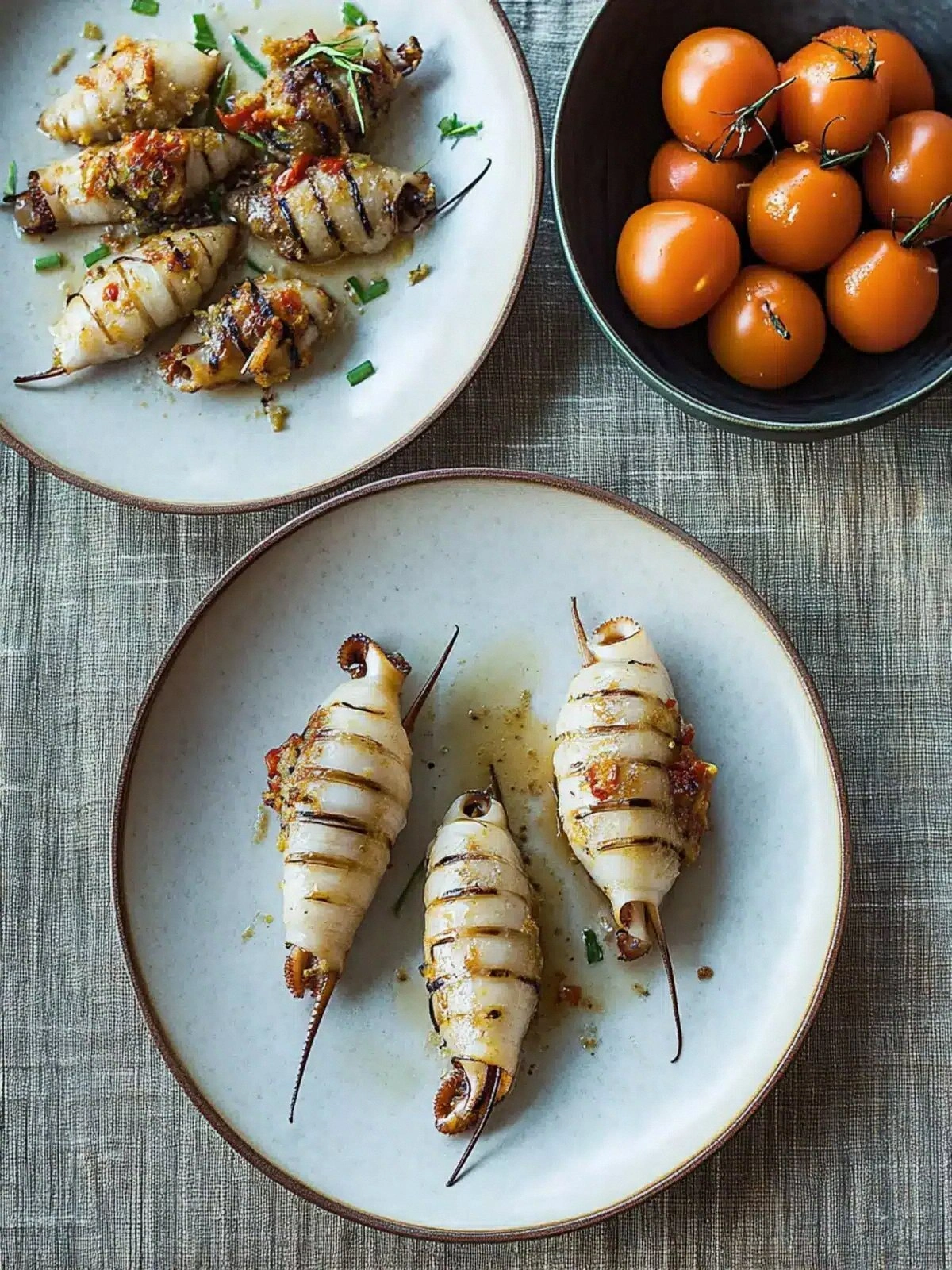 Now section 5: The Method — Step by Step.
The Method — Step by Step
Add Watch Out box at trickiest step: maybe step 6 (stuffing). We'll insert after step 6 paragraph.Kitchen Hack: If you’re short on time, use pre‑cooked rice from the store; it saves 10 minutes and still delivers a fluffy texture.Add another Kitchen Hack box maybe after step 7.Watch Out: Be careful not to overfill the squid tubes; a tightly packed stuffing can cause the shells to burst, spilling the filling and ruining the presentation.Now section 6: Insider Tricks for Flawless Results.Kitchen Hack: Wrap the parchment‑sealed squid in a clean kitchen towel during baking; the towel traps steam and keeps the squid extra moist.Insider Tricks for Flawless Results
Here are the little secrets that turn an already amazing dish into a legend.
The Temperature Rule Nobody Follows
While most cooks bake stuffed squid at 350°F, I found that 375°F gives a crispier shell without drying out the interior. The higher heat caramelizes the chorizo fat, creating a delightful crunch that contrasts with the tender squid. I’ve experimented with 400°F for a few minutes, but 375°F balances texture and flavor best. Keep the oven rack in the middle to ensure even heat distribution. This small tweak elevates the dish to professional level.
Why Your Nose Knows Best
Before you even taste the dish, inhale deeply. The aroma of smoked paprika and toasted pine nuts signals that the flavors are developing correctly. If the smell feels flat, you may need to add more paprika or give the filling more time to meld. The nose is a reliable indicator; don’t ignore it. This step saves you from a bland final result.
The 5‑Minute Rest That Changes Everything
After baking, let the stuffed squid rest on parchment for five minutes instead of two. This extra time allows the juices to redistribute, keeping the interior moist and preventing a dry bite. I’ve seen friends who skip this step complain that the filling feels loose. The rest also lets the flavors settle, making the dish taste more cohesive.
Use Freshly Ground Black Pepper
Crushed pepper adds a bright, sharp finish that balances the richness of the chorizo. Whole peppercorns ground just before serving release a subtle aroma that lingers on the palate. A pinch of pepper on top right before serving is a simple yet effective finishing touch.
Keep the Squid Fresh
When selecting squid, look for a firm texture and a mild sea scent. Avoid any that have a strong fishy odor or a slimy feel. Fresh squid cooks faster and holds its shape better during stuffing. If you’re buying frozen, thaw it overnight in the fridge for a gentle defrost.
Don’t Forget the Lemon
A squeeze of fresh lemon juice right before serving brightens the dish and cuts through the richness. The acidity balances the smoky and sweet elements, giving the dish a polished finish. If you’re feeling adventurous, add a splash of white wine to the filling for extra depth.
Now Kitchen Hack box for top tip. We'll add after first paragraph.Now section 7: Creative Twists and Variations.Kitchen Hack: If you’re short on time, use pre‑cooked rice from the store; it saves 10 minutes and still delivers a fluffy texture.Creative Twists and Variations
This recipe is a playground. Here are some of my favorite ways to switch things up:
Spicy Mexican Twist
Swap the chorizo for a mild Mexican chorizo and add a splash of chipotle sauce to the filling. The smoky heat pairs well with the sweet raisins, creating a fiery yet balanced flavor. Serve with a side of cilantro‑lime rice for a complete meal.
Mediterranean Medley
Replace the raisins with sun‑dried tomatoes and use a mix of pine nuts and almonds. Add a handful of chopped kalamata olives for briny depth. Finish with a drizzle of olive oil and a sprinkle of oregano.
Vegetarian Version
Omit the chorizo entirely and use a mixture of sautéed mushrooms, spinach, and crumbled feta. The mushrooms provide umami, while the feta adds creaminess. The dish remains hearty and satisfies the taste buds.
Low‑Carb Alternative
Replace the cooked rice with cauliflower rice for a lighter version. The cauliflower’s mild flavor absorbs the spices without adding extra carbs. Pair with a side of roasted asparagus.
Seafood Combo
Add diced shrimp or scallops to the filling for an extra burst of ocean flavor. The shrimp cooks quickly, so add it just before stuffing. This variation turns the dish into a seafood feast.
Herb‑Infused Surprise
Incorporate fresh dill, basil, or tarragon into the stuffing for a fragrant twist. These herbs complement the chorizo and add a fresh note that lifts the dish. A squeeze of lemon afterward will tie everything together.
Now section 8: Storing and Bringing It Back to Life.Storing and Bringing It Back to Life
Fridge Storage
Store leftover stuffed squid in an airtight container in the refrigerator for up to 2 days. Keep the parchment wrapped to preserve moisture. The flavors will deepen over time, making it even more delicious.
Freezer Friendly
Wrap each stuffed squid individually in plastic wrap, then place them in a freezer bag. Freeze for up to 3 months. When ready to eat, thaw overnight in the refrigerator to maintain texture.
Best Reheating Method
Reheat in a preheated oven at 350°F for 10 minutes, or until warmed through. Add a splash of water or broth before reheating to create steam, which keeps the squid moist. A quick broil for 1–2 minutes will crisp the exterior.
Now recipe card. We need to adapt the recipe card to match this recipe. We need to set data-default-servings to 4. We'll keep as 4. We need to provide ingredients list with checkboxes. We'll provide each ingredient as