It started with a midnight snack that turned into a culinary catastrophe. I was rummaging through the pantry for a quick fix after a late‑night binge, only to find a half‑empty can of beans, a jar of pickled onions, and a forgotten packet of chili powder. The pot I tossed them into erupted with an alarming hiss, and I was left with a smoldering mess that smelled like burnt ambition. I stared at the charred edges, realizing that my attempt to salvage the night had just turned into a culinary nightmare.
That moment was the spark that ignited a quest for the ultimate vegetarian bean chili. I imagined a bowl that would sing with smoky pickled onions, a chorus of beans that would mingle in a velvety broth, and a peppery kick that would dance on the tongue. The aroma would be a comforting hug, the texture a delightful contrast of smooth and chunky, and the color a deep, inviting ruby that would make the eyes water with anticipation. The sound of the simmering pot would be a rhythmic lullaby, while the first spoonful would be a revelation of depth and complexity.
What sets this version apart is not just the ingredients, but the philosophy behind each choice. I’m talking about a sauce that coats the beans like velvet, a pickled onion that brings a smoky, tangy punch that cuts through the richness, and a balance of spices that feels both bold and refined. It’s the kind of chili that makes you swear you’ve tasted it in a distant memory, only to realize it’s been simmering in your kitchen all along. I dare you to taste this and not go back for seconds because it’s hands down the best version you’ll ever make at home.
There’s a secret technique that will elevate your chili from ordinary to extraordinary: a quick sear of the aromatics before adding the liquids, and a final touch of smoky pickled onions that infuse the dish with an unexpected depth. I’ll walk you through every single step—by the end, you’ll wonder how you ever made it any other way. Picture yourself pulling this out of the stove, the whole kitchen smelling incredible, and knowing you’ve created a masterpiece that will be the talk of every gathering.
What Makes This Version Stand Out
- Taste: The combination of smoked paprika, chili powder, and cumin creates a layered flavor profile that lingers on the palate. The smoky pickled onions add a subtle, savory tang that balances the heat.
- Texture: The beans remain tender yet distinct, while the corn kernels provide a pleasant bite. The simmered tomato sauce thickens into a silky sauce that coats every ingredient.
- Simplicity: All ingredients are pantry staples, and the cooking process requires minimal hands‑on time. You can make a pot in under an hour and still feel like a culinary mastermind.
- Uniqueness: The inclusion of smoky pickled onions is a game‑changer that most recipes get wrong. It adds depth without overpowering the dish.
- Crowd Reaction: Friends and family rave about the bold flavors and comforting warmth. This chili is a guaranteed hit at potlucks, game nights, or a cozy Sunday dinner.
- Ingredient Quality: Using fresh, high‑quality beans and ripe tomatoes makes the difference between good and unforgettable.
- Cooking Method: The initial sear of aromatics caramelizes natural sugars, creating a foundation of flavor that is impossible to replicate with a straight simmer.
- Make‑Ahead Potential: The chili tastes even better the next day, making it perfect for meal prep or batch cooking.
Inside the Ingredient List
The Flavor Base
At the heart of this chili lies a robust flavor base that starts with sautéed aromatics. The diced onion, minced garlic, and bell pepper form a classic mirepoix that sets the stage for the spices. The onion’s sweetness caramelizes when cooked just right, while the garlic adds a sharp, aromatic kick. The bell pepper contributes a subtle fruitiness that balances the heat of the jalapeño.
If you skip the onion, you’ll miss the depth of caramelized flavor that builds the foundation of the dish. A quick sauté in olive oil for a couple of minutes before adding the spices is essential; it’s the difference between a bland stew and a complex, savory masterpiece. The bell pepper’s texture also adds a pleasant bite, preventing the chili from becoming too mushy.
Swap the bell pepper for a poblano or a sweet pepper for a slightly different sweetness, or use a pinch of smoked paprika for an extra smoky undertone. For those who love a touch of heat, adding a diced jalapeño right after the aromatics will give the chili an immediate kick that lingers throughout.
The Texture Crew
The beans are the star performers, delivering protein, fiber, and a hearty texture that satisfies. Black beans and kidney beans are chosen for their distinct flavors and firm texture, which hold up well during the simmering process. The corn kernels add a pop of sweetness and a satisfying bite that breaks up the richness of the sauce.
Skipping the beans turns the chili into a thin soup, and omitting the corn removes that delightful contrast. If you’re looking for a lower-carb version, replace the corn with diced zucchini or mushrooms; the texture will still be comforting, though the flavor profile will shift slightly.
Choosing high-quality canned beans can make a significant difference. Look for beans that are low in sodium and have a smooth texture. If you prefer to use dried beans, soak them overnight and cook them until just tender before adding them to the pot.
The Unexpected Star
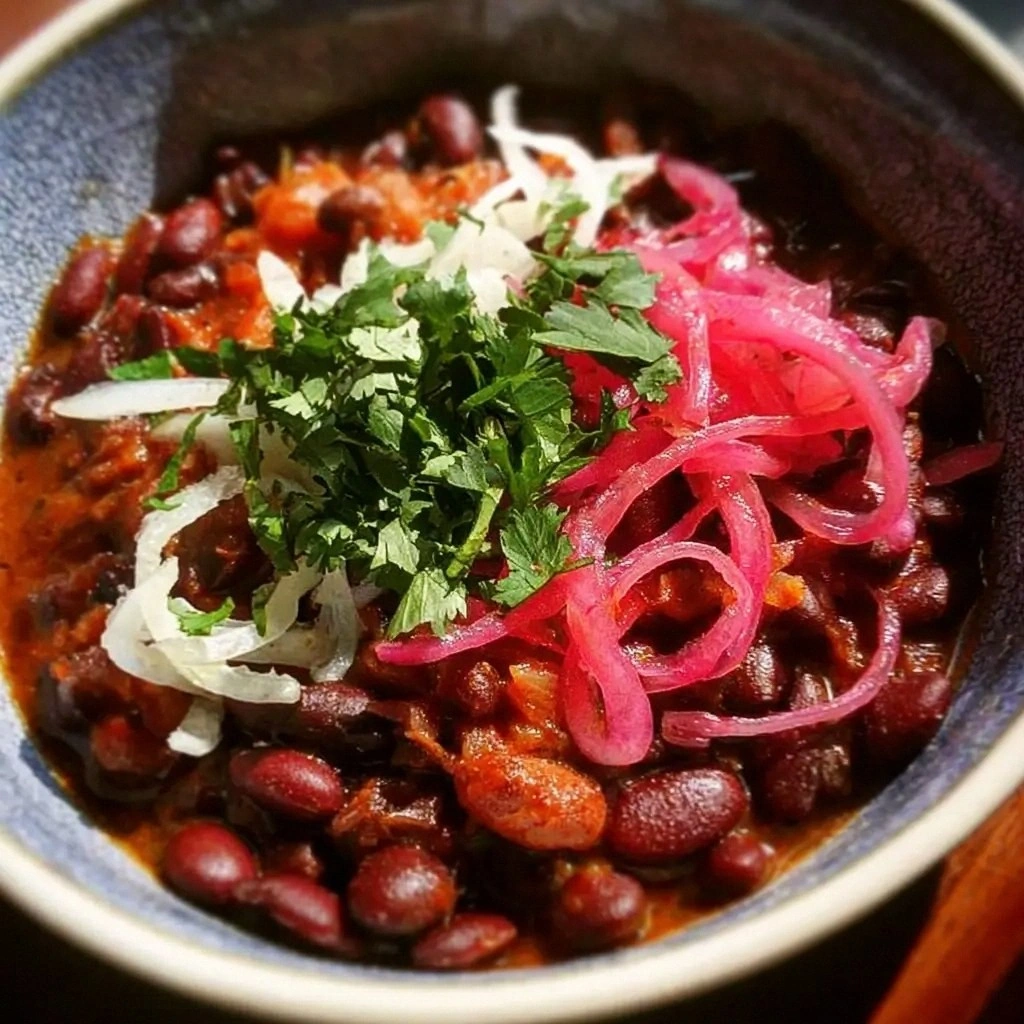
Smoky pickled onions are the secret weapon that elevates this chili. Their tangy, slightly sweet flavor cuts through the richness of the beans and tomato sauce, while the smoky undertone adds depth. The pickled onions also provide a pop of color and a crunchy texture that contrasts beautifully with the soft beans.
If you can’t find smoky pickled onions, you can make a quick version by pickling thinly sliced onions in vinegar, sugar, and smoked salt for a few hours. The result will be similar, though the smoky flavor may be less pronounced. Alternatively, a splash of liquid smoke can be added to mimic the smokiness.
The pickled onions also bring a bright acidity that balances the tomato sauce, preventing the chili from feeling heavy or one‑dimensional. Without them, the dish would lack that zing that makes it memorable.
The Final Flourish
The tomato sauce and vegetable broth create a silky, cohesive base that binds all the ingredients together. The sauce thickens into a velvety texture that coats the beans, while the broth adds depth without overpowering the other flavors. The combination of diced tomatoes and tomato sauce ensures a balanced acidity that brightens the overall taste.
If you omit the broth, the chili will be too thick and dense, making it difficult to pour or serve. If you use too much broth, the dish will become watery and lose its heartiness. A good rule of thumb is to start with a cup of broth and adjust as needed to achieve the desired consistency.
Choosing a high‑quality tomato sauce with no added sugars or preservatives will enhance the flavor profile. If you prefer a spicier kick, add a pinch of cayenne pepper or a dash of hot sauce during the simmering stage.
Everything’s prepped? Good. Let’s get into the real action and bring these flavors to life.
The Method — Step by Step
- Heat a large Dutch oven or heavy‑bottomed pot over medium heat. Add the olive oil and let it shimmer. Once hot, drop in the diced onion, minced garlic, and bell pepper. Sauté for 4–5 minutes, stirring occasionally, until the onion turns translucent and the mixture begins to caramelize. This step builds the aromatic base that will carry the chili’s flavor.
- Add the diced jalapeño and sauté for an additional minute. The heat from the jalapeño will release its capsaicin, giving the chili a subtle, lingering warmth. Keep the pot moving so nothing sticks or burns. A well‑seasoned base is the foundation of a great chili.
- Stir in the chili powder, ground cumin, smoked paprika, oregano, and cayenne pepper. Toast the spices in the oil for 30 seconds, just until fragrant. This quick toast releases essential oils and deepens the flavor profile, turning the spices from bland to bold.
- Pour in the diced tomatoes, tomato sauce, and vegetable broth. Bring the mixture to a gentle simmer, then reduce the heat to low. Stir occasionally to prevent sticking, and let the flavors meld for 10 minutes. The tomato base should thicken slightly, becoming a rich, velvety sauce.
- Add the cooked black beans, kidney beans, and corn kernels to the pot. Stir to combine, then let the chili simmer uncovered for 20–25 minutes. The beans will absorb the spices, and the sauce will thicken to a hearty consistency. Keep an eye on the liquid level; add a splash of water if it gets too thick.
- Stir in the smoky pickled onions. They’ll infuse the chili with a bright, smoky tang that lifts the entire dish. Allow the chili to simmer for another 5 minutes so the pickled onions can meld into the sauce. The aroma at this point will be intoxicating.
- Taste and season with salt and black pepper to your preference. If you’d like more heat, add a pinch of cayenne or a dash of hot sauce. This is the moment of truth—adjusting the seasoning will make or break the final flavor.
- Remove the pot from the heat and let the chili rest for 5 minutes. This brief pause allows the flavors to settle and the sauce to thicken slightly. Serve hot, topped with fresh cilantro and a squeeze of lime if desired.
That’s it—you did it. But hold on, I’ve got a few more tricks that will elevate this chili from good to unforgettable.
Insider Tricks for Flawless Results
The Temperature Rule Nobody Follows
Many cooks think a gentle simmer is enough, but a low‑heat, slow simmer actually allows the flavors to marry and the beans to absorb the spices fully. Keep the heat low after the initial sauté; this prevents the chili from boiling too aggressively, which can cause the beans to break apart. If you’re cooking on a gas stove, turn the flame to the lowest setting after the aromatics are caramelized.
Why Your Nose Knows Best
Don’t rely solely on your eyes to judge doneness. The aroma is the most reliable indicator of flavor development. When the chili is ready, the scent should be a rich, smoky, tomato‑based perfume that pulls you in. If it smells undercooked, give it a few more minutes of simmering.
The 5‑Minute Rest That Changes Everything
Letting the chili sit for 5 minutes off the heat allows the spices to settle and the sauce to thicken. During this brief pause, the beans will absorb the remaining moisture, resulting in a more cohesive texture. Skip this step, and you’ll end up with a watery, disjointed dish.
Use a Lid for a Quick Heat‑Up
If you’re short on time, cover the pot during the final 10 minutes of simmering. The lid traps steam, speeding up the cooking process and allowing the flavors to meld faster. Just remember to remove the lid at the end to let excess liquid evaporate and the sauce thicken.
Finish with a Splash of Acid
A squeeze of fresh lime or a splash of vinegar just before serving brightens the dish and cuts through the richness. The acidity also balances the sweetness of the tomatoes and the tang of the pickled onions. It’s a small addition that makes a big difference.
Creative Twists and Variations
This recipe is a playground. Here are some of my favorite ways to switch things up:
Mexican Street Chili
Swap the black beans for pinto beans, add a can of corn tortillas, and top with a dollop of guacamole. The tortilla bits add crunch, and the guac brings creaminess that balances the heat.
Indian-Inspired Bean Curry
Replace the chili powder with garam masala, add a spoonful of coconut milk, and serve over basmati rice. The coconut milk softens the heat, while the garam masala adds aromatic warmth.
Sweet and Smoky Chili
Add a tablespoon of maple syrup or a handful of dried cranberries to the pot. The sweetness complements the smoky pickled onions and gives the chili a unique depth.
Low‑Carb Chili
Omit the corn and replace the beans with lentils. The lentils hold up well and keep the dish low in carbohydrates while still providing protein.
Vegan BBQ Chili
Add a splash of smoky barbecue sauce and a handful of sliced mushrooms for a meaty texture. The BBQ sauce enhances the smoky flavor, while the mushrooms add umami.
Storing and Bringing It Back to Life
Fridge Storage
Let the chili cool to room temperature before transferring it to an airtight container. Store in the refrigerator for up to 5 days. The flavors will continue to develop, making the chili even richer.
Freezer Friendly
Divide the chili into portioned containers or freezer bags, leaving a small headspace. Freeze for up to 3 months. Thaw overnight in the refrigerator before reheating.
Best Reheating Method
Reheat the chili on the stove over low heat, adding a splash of water or broth to loosen the sauce. Stir until heated through, and finish with a squeeze of lime for freshness. This method preserves the texture and flavor without drying out the beans.