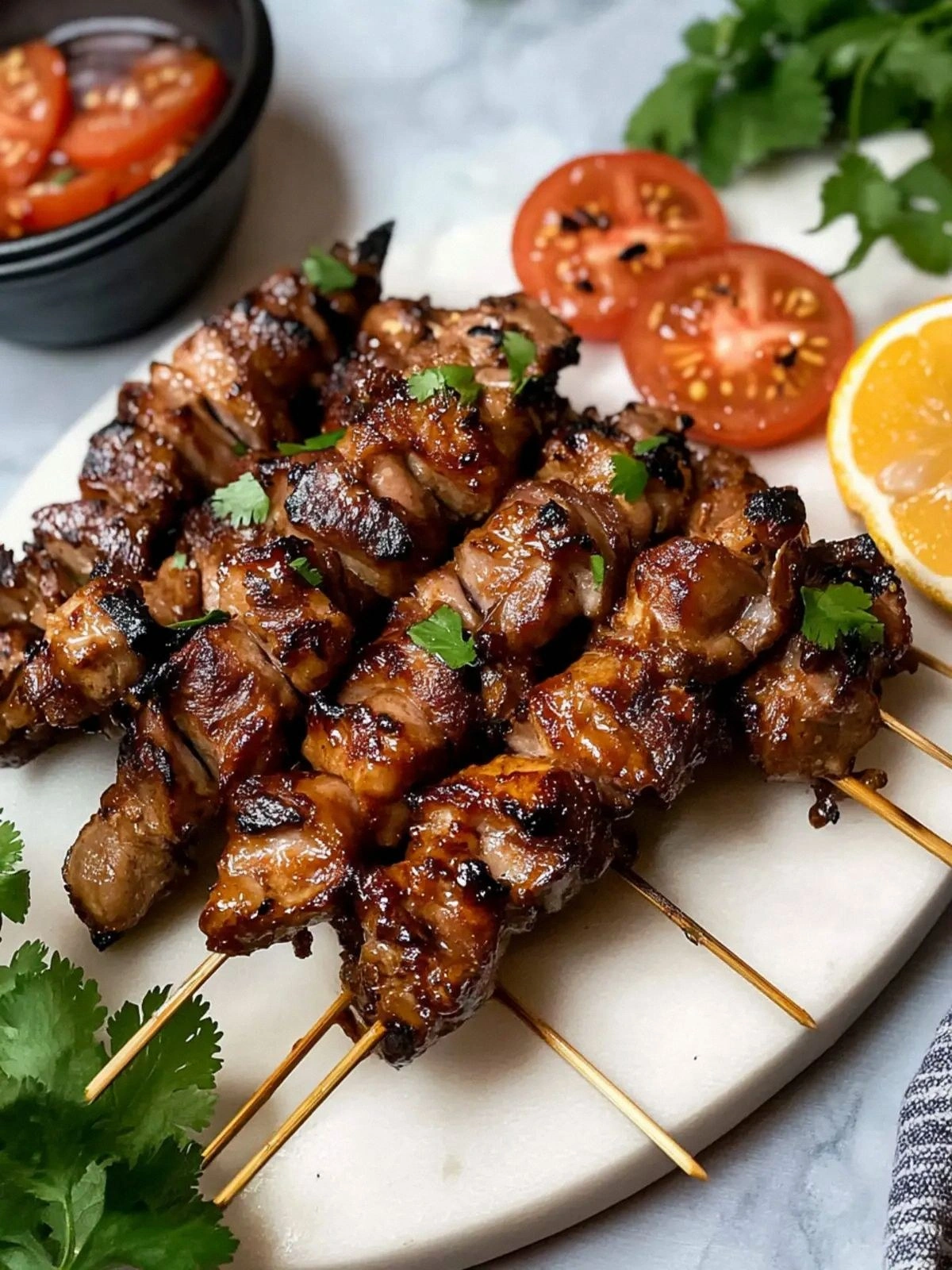
Picture yourself pulling these skewers out of the grill, the whole kitchen smelling incredible, the air thick with caramelized sugar and lemongrass. I’ve been chasing that exact aroma for years, and the moment I first tasted this version, I was hooked. The pork, glistening with a glossy, caramelized coat, is so juicy that every bite practically melts on your tongue. That sizzle when it hits the pan? Absolute perfection. I dare you to taste this and not go back for seconds.
It started with a kitchen disaster—my last attempt at Vietnamese pork skewers turned out dry, rubbery, and flavorless. I was left with a pile of overcooked pork that tasted like a bland, over‑seasoned casserole. I promised myself I would never let that happen again. So I dug into the pantry, scoured forums, and experimented until I found the secret sauce that turned the dish into a juicy masterpiece.
What makes this version stand out is not just the combination of sauces, but the technique that locks in moisture and builds layers of flavor. The pork is marinated for hours, then seared to create a caramelized crust that seals in juices. The glaze, a blend of fish sauce, soy, dark soy, oyster, and a touch of honey, coats the meat like velvet. I’ve tried countless variations, but this one is hands down the best version you’ll ever make at home.
If you've ever struggled with getting pork belly juicy, you're not alone—and I've got the fix. Most recipes get this completely wrong. Here's what actually works: a long, slow marination, a high‑heat sear, and a glaze that balances saltiness, sweetness, and umami. The result is a pork belly that stays tender even after cooling, and a glaze that clings without becoming sticky.
I’ll be honest— I ate half the batch before anyone else got to try it. The pork was so tender that the meat practically fell off the stick. I’ve had friends come back asking for the recipe, only to find the original was too dry. This version solves that problem with a simple, foolproof method that guarantees juicy, flavorful results every time.
And now the fun part. The next step? Marinating the pork with a blend of fish sauce, soy sauce, and a splash of honey to give it that sweet, savory kick. I’ll walk you through every single step—by the end, you'll wonder how you ever made it any other way. Stay with me here—this is worth it.
The first thing you’ll notice is the aroma of lemongrass and garlic, a fragrance that instantly transports you to a Vietnamese street market. The visual appeal is undeniable: golden‑brown edges, a glossy glaze that catches the light. The texture is a contrast of tender, juicy meat and a crisp, caramelized crust. This dish is a sensory explosion that satisfies the craving for something savory, sweet, and aromatic all at once.
I’ve spent weeks tweaking the ratios, testing different cuts, and refining the glaze until it was perfect. The result is a pork belly that is both melt‑in‑your‑mouth tender and crisp on the outside. The glaze is thick enough to cling to each piece but thin enough to be a silky, flavorful coating. This is the ultimate balance between texture and flavor.
What Makes This Version Stand Out
- Juiciness: A long marination with salt and sugar balances moisture retention, keeping the pork belly succulent.
- Flavor Depth: The combination of fish sauce, soy, and dark soy delivers a layered umami that’s unmistakably Vietnamese.
- Texture: The high‑heat sear creates a caramelized crust that crisps without drying out the meat.
- Visual Appeal: A glossy glaze that catches the light, making each skewer a feast for the eyes.
- Ease: The recipe uses pantry staples, so you can whip it up in under an hour.
- Make‑Ahead Friendly: Marinate the pork the night before for maximum flavor penetration.
Alright, let's break down exactly what goes into this masterpiece...
Inside the Ingredient List
The Flavor Base
The heart of the glaze is a blend of fish sauce, soy sauce, dark soy sauce, oyster sauce, and a touch of honey. Each sauce contributes a distinct layer: fish sauce offers a briny depth, soy brings saltiness, dark soy adds a hint of sweetness and color, oyster sauce provides umami richness, and honey balances the salt with natural sweetness. If you skip any of these, the glaze loses complexity, and the pork becomes one‑dimensional.
You can swap fish sauce for a splash of soy sauce with a pinch of sea salt if you’re avoiding fish, but the authentic flavor profile will shift slightly. The dark soy sauce is key for color; if you don’t have it, a small amount of molasses or brown sugar can mimic the sweetness, but the caramelization will differ.
When selecting fish sauce, choose a reputable brand that isn’t overly bitter. Look for a clear, amber liquid with a balanced aroma. A good fish sauce will enhance the pork without overpowering it.
The Texture Crew
The pork belly itself is the star of the show. Opt for a skinless cut to avoid excess fat rendering into the glaze. The 3‑lb weight ensures you have enough meat for generous skewers that can feed a crowd. Cutting the pork into even 1‑inch cubes guarantees uniform cooking and prevents some pieces from drying out while others are still raw.
If you’re using pork butt instead, trim the fat cap and cut the meat into similar sizes. The texture will be slightly different—pork butt has a firmer bite—but the glaze will still cling beautifully.
The Unexpected Star
Lemongrass, garlic, shallot, and green onion bring bright, aromatic notes that cut through the richness of the pork. Lemongrass, bruised and minced, releases a citrusy fragrance that elevates the dish. Garlic adds a warm, savory punch, while shallot provides a subtle sweetness. Green onion gives a fresh, crisp finish that balances the heavy glaze.
If you’re allergic to any of these, you can substitute with ginger for a slightly different but still delightful flavor. However, the original combination delivers a complex bouquet that’s hard to replicate.
The Final Flourish
Vegetable oil and a pinch of salt and sugar finish the glaze, creating a glossy sheen and a subtle sweet‑salty contrast. The oil helps the glaze adhere to the pork, while the salt amplifies the umami, and the sugar caramelizes for a beautiful finish. Skipping the oil will result in a drier glaze that doesn’t cling as well.
When selecting vegetable oil, choose one with a high smoke point like canola or peanut oil. This allows you to sear the pork at a high temperature without burning the glaze.
Everything's prepped? Good. Let's get into the real action...
The Method — Step by Step
- Marinate the Pork: In a large bowl, combine the pork cubes with fish sauce, soy sauce, dark soy sauce, oyster sauce, honey, minced garlic, minced lemongrass, and a pinch of salt and sugar. Toss until each piece is coated, then cover and refrigerate for at least 2 hours, preferably overnight. The extended marination allows the pork to absorb the umami and sweet flavors deeply.
- Prepare the Skewers: If using wooden skewers, soak them in water for 30 minutes to prevent burning. Thread the marinated pork cubes onto the skewers, alternating with slices of shallot and pieces of green onion for visual appeal and added flavor.
- Heat the Grill or Skillet: Preheat a grill to medium‑high or a cast‑iron skillet over high heat. The key is a hot surface that sears the pork quickly, locking in juices. If using a skillet, drizzle a thin layer of vegetable oil to prevent sticking.
- Sear the Skewers: Place the skewers on the grill or skillet and sear for 2–3 minutes on each side, or until a caramelized crust forms. The pork should emit a rich, smoky aroma, and the glaze should thicken slightly. Watch the edges; they should start pulling away from the meat, indicating a good sear.
- Reduce the Glaze: While the pork is searing, transfer the remaining glaze mixture to a small saucepan. Bring to a simmer over medium heat, stirring frequently to prevent sticking. Reduce for 5–7 minutes until the glaze thickens to a syrupy consistency that coats the back of a spoon.
- Baste the Skewers: Once the glaze has thickened, brush it generously onto the seared pork. Return the skewers to the grill or skillet for an additional minute per side, allowing the glaze to caramelize and form a glossy finish.
- Finish with Fresh Green Onion: Just before serving, sprinkle chopped green onion over the skewers for a burst of freshness and color. The onion adds a bright counterpoint to the rich glaze.
- Serve Immediately: Present the skewers hot, accompanied by a side of steamed rice or fresh lettuce wraps. The pork should be juicy, the glaze sticky, and the aroma intoxicating.
That's it — you did it. But hold on, I've got a few more tricks that'll take this to another level. Keep reading for insider tips that will elevate even the best cook.
Insider Tricks for Flawless Results
The Temperature Rule Nobody Follows
Many cooks assume that higher heat always yields better sear, but that’s a myth. The optimal sear temperature for pork belly is around 375°F (190°C). At this temperature, the exterior caramelizes while the interior stays moist. If you go too hot, the glaze burns before the pork finishes cooking.
Why Your Nose Knows Best
When the glaze starts to bubble, the aroma will change from sweet to slightly smoky. This subtle shift indicates that the sugars are caramelizing. Trust that scent; it’s a reliable cue that your glaze is ready for the next step.
The 5-Minute Rest That Changes Everything
After removing the skewers from the heat, let them rest on a wire rack for 5 minutes. This allows the juices to redistribute, preventing them from spilling onto the grill and creating a soggy exterior. The rest also lets the glaze set, giving it a glossy sheen.
Keep the Skewers Dry
Before searing, pat each pork cube dry with paper towels. Moisture on the surface creates steam, which hinders caramelization. A dry surface ensures a crisp, caramelized crust.
Use a Skewered Skewer
If you’re new to skewering, use a bamboo skewer with a metal tip to prevent the wood from burning. This also makes it easier to flip the skewers without breaking the sticks.
Creative Twists and Variations
This recipe is a playground. Here are some of my favorite ways to switch things up:
Spicy Sriracha Glaze
Add a tablespoon of Sriracha to the glaze for a fiery kick. The heat pairs wonderfully with the sweetness, creating a balanced flavor profile that excites the palate.
Citrus Twist
Replace half the lemongrass with zest from a fresh lime. The citrus brightens the dish and adds a zesty finish that contrasts the rich pork.
Smoky Chipotle
Incorporate a teaspoon of chipotle powder into the glaze for a subtle smoky flavor. The chipotle adds depth and a hint of heat, making the dish more complex.
Herb‑Infused Marinade
Add chopped cilantro and basil to the marination. The fresh herbs infuse the pork with a bright, aromatic note that complements the savory glaze.
Vegetarian Version
Swap pork belly for thick slices of tofu or seitan. Marinate them in the same glaze, then grill until crispy. The tofu absorbs the sauce, offering a plant‑based alternative that still delivers the same flavor.
Dessert Skewers
Use a sweet glaze—replace honey with maple syrup and add a pinch of cinnamon. Pair with a drizzle of dark chocolate for a sweet, savory dessert skewers that are surprisingly delightful.
Storing and Bringing It Back to Life
Fridge Storage
Store leftover skewers in an airtight container in the refrigerator for up to 3 days. The glaze may thicken, so reheat gently to restore its glossy sheen.
Freezer Friendly
For longer storage, wrap each skewer tightly in foil and place in a freezer bag. Freeze for up to 2 months. Thaw overnight in the fridge before reheating.
Best Reheating Method
Reheat in a preheated oven at 350°F (175°C) for 10 minutes, then finish on a grill or skillet for a minute to crisp the glaze. Add a tiny splash of water before reheating to steam back to perfection.